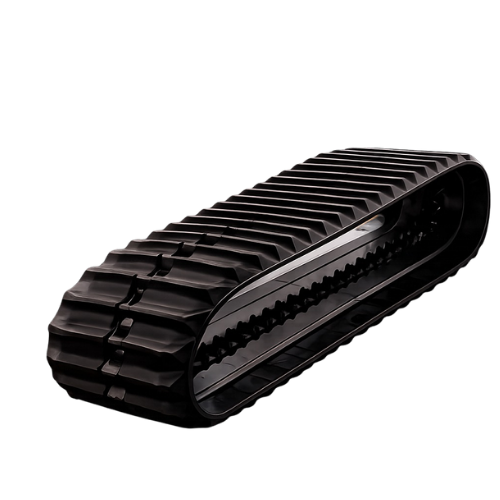
Best Rubber Track for Harvesters
Enhance your harvesting efficiency with high-quality Rubber Tracks designed for combine harvesters. Built with strong rubber compound for durability, these tracks deliver up to 1500 hours of working life with proper use.

High-quality rubber track designed for combine harvesters, offering long life, strong grip, reduced soil damage, and smooth performance in all terrains.
Rubber Track for Combine Harvester | Heavy Duty | Long Life & Soil Protection

Designed to deliver real value by mechanizing key tasks and boosting productivity
Farmer From
This brush cutter from Royal Kissan Agro is strong and easy to operate. It cleared thick weeds in my field quickly, making farm work much easier
Farmer From
Royal Kissan Agro’s water pump in Tamil Nadu delivers water strongly and reliably. It keeps our irrigation running even in dry spells and has boosted our rice yield
Farmer From
In Telangana I rely on this chaff cutter for my cattle fodder. It shreds stalks finely and quickly, saving hours of work and helping my cows eat better
Farmer From
The chainsaw from Royal Kissan Agro is strong and easy to handle. In Andhra we use it to cut firewood and clear branches; it works quickly with no issues
Farmer From
Royal Kissan Agro’s hose pipe is flexible and durable. In Karnataka, it's essential for irrigating my tea plantation, delivering water evenly without any leaks
Farmer From
This sprayer from Royal Kissan Agro sprays evenly and is easy to carry. In Kerala’s paddy fields, it helped me apply fertilizer quickly and improved my harvest

Everything you need to know about our products and services
Field hours tell part of the story. Somewhere around 1,000 hours is when experienced operators begin watching more carefully. Whether a track reaches 1,500 hours or falls short of it comes down to the ground it’s been running on, how the machine has been maintained, and whether tension was kept correct through the season. Hard, stony soil grinds through rubber in ways that soft paddy ground simply doesn’t. Two machines with identical hours can be in completely different conditions depending on where they’ve worked.
Replacement doesn’t need guesswork. The track shows it clearly enough — rubber splitting or cracking through the body, lugs that have worn flat or broken away, cord becoming visible anywhere along the surface. Each of those is a sign the track has already been working past its safe point. The width that is not uniform on the track should also be studied alone, since the likelihood that it is caused by some sort of tension problem that requires adjustment before the installation of the track is very high. The walk-around test, once every 250-300 hours, takes just a few minutes and could save you from being stopped dead in your tracks.

Tracks are produced across a broad range of sizes and pitch configurations to cover the machine types running across Indian farms and contracting operations. Finding the right fit requires either the machine model number or the measurements from the track currently fitted — width, pitch, and link count. Either one is enough to confirm the correct match before supply. For dealers/distributors dealing with spare parts in the Punjab area and surrounding areas, supply on a wholesale/bulk scale is made available regularly. For pricing and other queries for larger orders, the sales department deals directly.
Weight doesn’t disappear — it goes somewhere. On a wheeled machine or a steel-tracked one, that weight concentrates through narrow contact points into the soil below. The ground absorbs it by compressing. On a rubber track, the same machine weight gets carried across a longer, broader contact surface, so what reaches any single point in the soil is considerably less.
Compacted soil causes problems that don’t surface immediately. The season after a heavy machine has worked compacted ground, roots push down and hit a dense layer they can’t penetrate. Rainfall doesn’t move through the profile the way it should — it collects instead of draining. Crop performance drops, and the reasons aren’t always obvious at first. By the time a farmer links underperforming yields back to soil structure, the compaction has typically been building across more than one season. Keeping ground pressure low from the start — which a properly designed wide track does — is what prevents that cycle from beginning in the first place.
Size is the most direct factor. A track built wider, with a longer pitch between lugs, uses more material and requires tighter production tolerances — that cost comes through in the price. Machine compatibility is the second variable, because tracks built for different machine types are engineered to different specifications and aren’t priced the same way. Third is the rubber compound itself. Two tracks sitting side by side can look nearly identical and perform very differently over a season, depending on what the compound was actually built to handle.
Lower-priced aftermarket tracks exist, and they sell on the strength of that upfront number. The difficulty is that most of them wear through well before a proper season ends. Spread the purchase price across actual working hours, and the cost-per-hour figure rarely holds up against a track built to last. A properly rated track, built honestly for 1,500 hours of work, returns better value across two to three seasons than a cheaper replacement cycled in and out. Exact pricing depends on track dimensions and machine type — the sales team handles specific quotations, including bulk rates for dealers and contractors.
This is where a lot of tracks quietly fall short. Not all at once — gradually, as conditions shift between regions and seasons. Dry wheat fields put hard, abrasive pressure on rubber through long working days. Waterlogged paddy ground demands grip and flexibility in wet, soft soil where the machine is constantly adjusting. Uneven or hilly terrain adds mechanical stress that tracks designed purely for flat fields were never built to absorb consistently.
Handling that full range requires the rubber compound to be built with it in mind from the start. It needs to stay flexible enough for wet ground without losing structural integrity, and dense enough for dry abrasive conditions without surface cracking developing over time. Contractors moving machines between different growing regions during the season carry real risk if the track isn’t up to both ends of that range. Performance holds consistently here across paddy, wheat, sunflower, and mixed crop operations — and the field surface stays protected regardless of what the ground conditions are on any given day.
WhatsApp us