
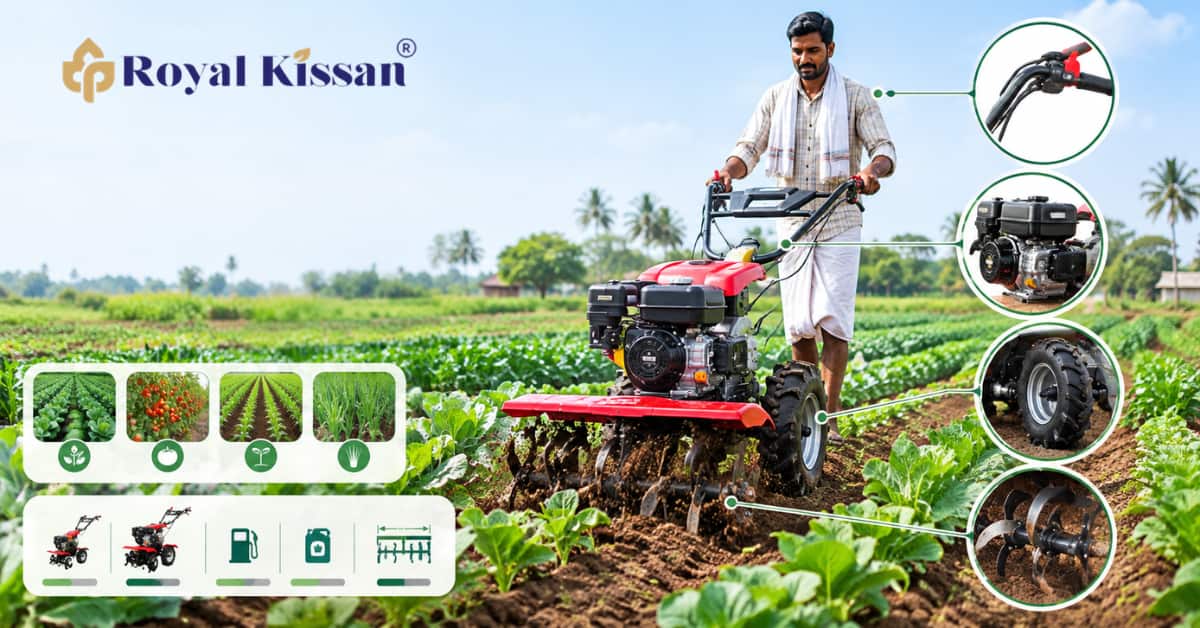
Buy Agricultural Power Weeder Online: A Complete Guide for Indian Farms and Dealership Support
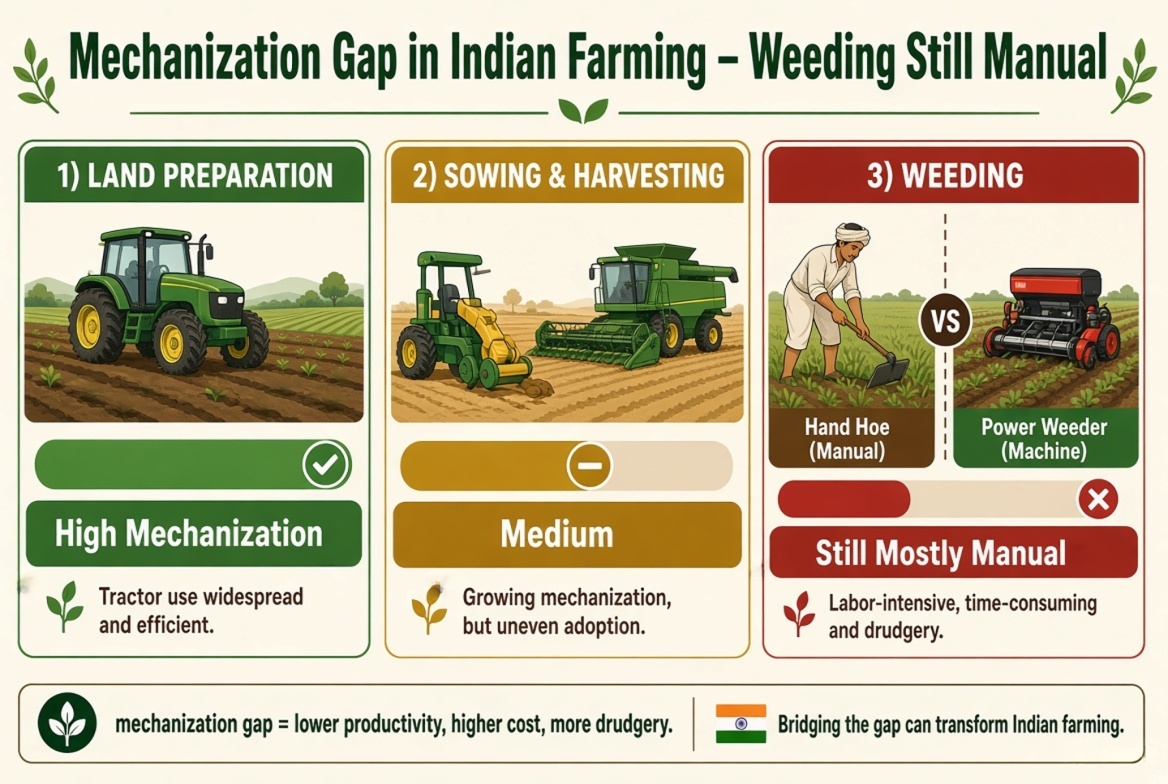
Weeding remains the most manual, most labor-heavy operation on most Indian farms, lagging well behind land preparation and sowing in terms of machine adoption. A power weeder is the most direct way to close that gap, but the machine only delivers if it’s backed by a manufacturer with real certification, subsidy support, and a dealer network a farmer can actually reach. This guide covers what a power weeder does, how it fits into modern Indian farming, and what to check before buying one online through a dealer.
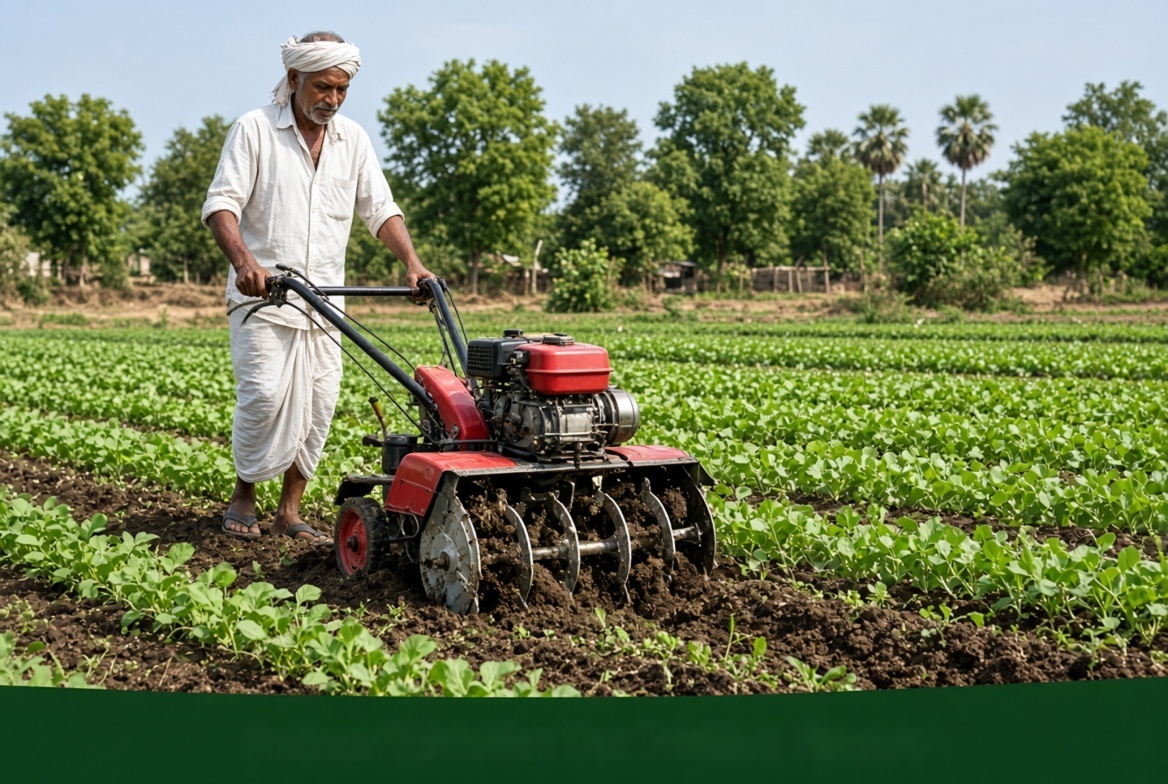
Table of Contents
-
What Is Modern Agricultural Equipment in India?
-
Why Weeding Lags Behind Other Farm Operations
-
How Power Weeders Improve Farm Productivity
-
Government Support and Subsidy Schemes
-
Power Weeder Dealership: Where It Fits In
-
Royal Kissan Power Weeder Range
-
Power Weeder Dealership: What to Check Before You Buy Online
-
Frequently Asked Questions
What Is Modern Agricultural Equipment in India?
Modern agricultural equipment covers powered machines that replace or assist manual labor at every stage of the crop cycle: land preparation, sowing, weeding, plant protection, harvesting, and post-harvest handling. In India, this spans large tractors and combine harvesters down to walk-behind machines like power weeders and power tillers, built specifically for the small, fragmented plot sizes common across Indian farmland.
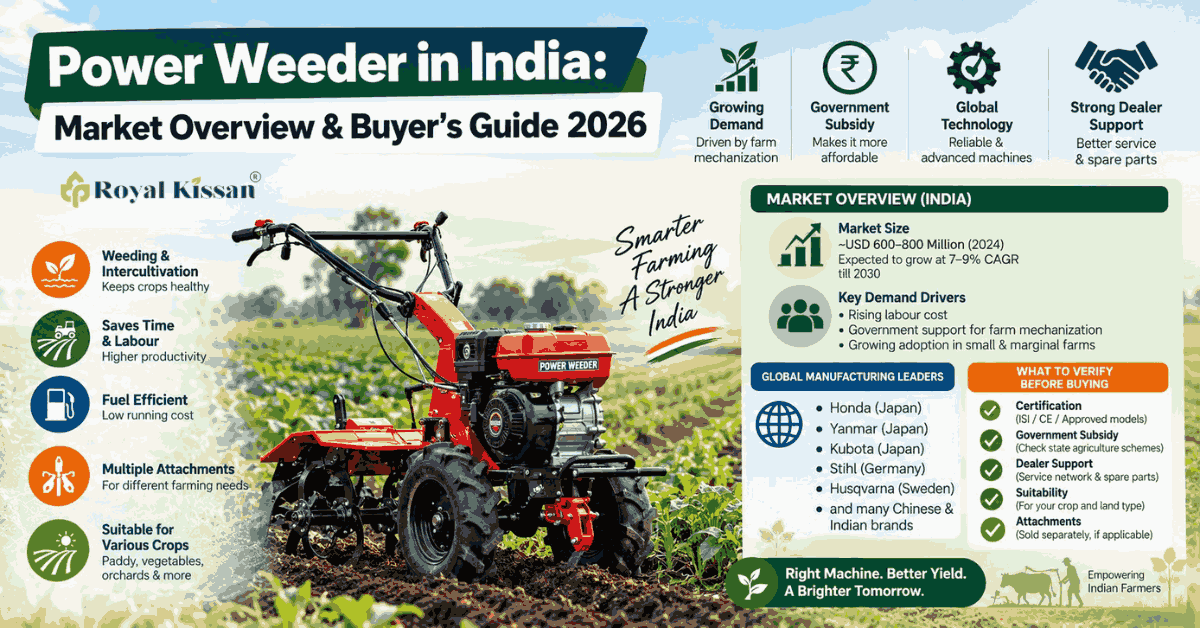
The mix matters more than the total count of machines in use. India’s mechanization is still concentrated heavily in tractors, which handle general tillage and transport well but don’t directly address operations like weeding, where manual labor still dominates on most farms. Power weeders, chaff cutters, and other crop-specific machines exist to fill that gap for farms too small or too specialized to justify a full tractor-and-implement setup.
Why Weeding Lags Behind Other Farm Operations
Land preparation is the most mechanized stage of Indian farming by a wide margin, followed by sowing and harvesting. Weeding sits at the bottom of that list, still done largely by hand across a majority of small and marginal holdings. This isn’t because weeding is less important. If anything, delayed or inconsistent weeding competes directly with the crop for nutrients, water, and light, and manual weeding pulls labor away from other time-sensitive field operations exactly when farms need that labor most.
The reason weeding lags isn’t the absence of machines; it’s accessibility. Full-sized weeding equipment doesn’t suit small plots, hilly terrain, or the tight budgets of marginal farmers, which is where lightweight, walk-behind power weeders step in as a practical middle ground between manual labor and heavy machinery.
How Power Weeders Improve Farm Productivity
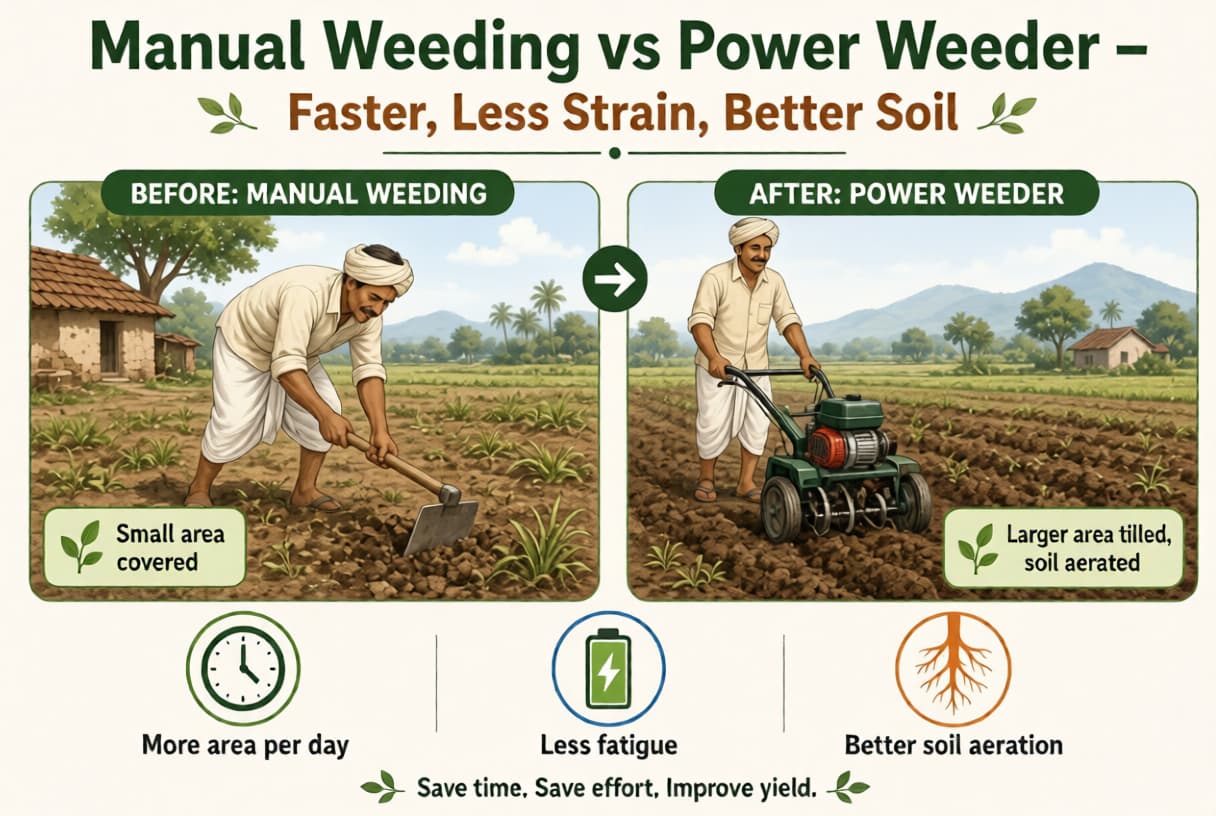
A power weeder does the physical work of a hand hoe at a fraction of the time and physical strain, letting a farmer cover more ground per day and free up labor for other tasks. Beyond speed, mechanized weeding also aerates the soil near the root zone as it works, which supports better water and nutrient uptake compared with static hand weeding.
The broader productivity story in Indian agriculture increasingly points toward this kind of targeted, task-specific mechanization rather than more tractor purchases. Tractor ownership has already reached a saturation point on many farms, where an additional tractor adds little further productivity gain. The larger opportunity now sits in machines that address the operations tractors don’t touch, and weeding is the clearest example of that gap.
Government Support and Subsidy Schemes
India’s central and state governments actively subsidize farm machinery purchases, including power weeders, through mechanization schemes aimed at improving access for small and marginal farmers. These schemes typically fund a portion of the purchase price directly, and separately support custom hiring centres and farm machinery banks, which let farmers rent equipment rather than buy it outright.
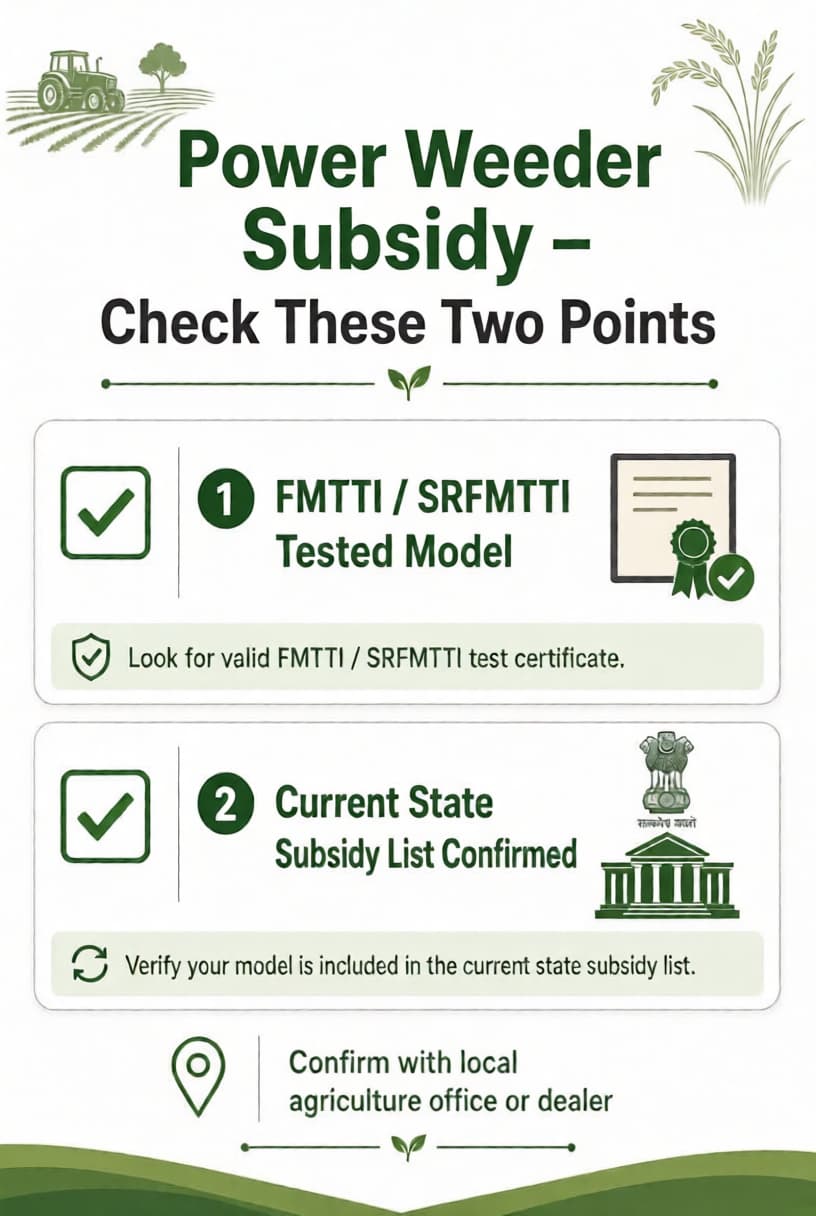
Two things matter for a power weeder buyer here. First, only machines that carry FMTTI or SRFMTTI testing usually qualify for subsidy support, so certification status needs to be confirmed on the specific model, not assumed from the brand generally. Second, approved model lists and subsidy percentages vary by state and are revised periodically, so current eligibility should always be confirmed with the local agriculture department or through the dealer at the time of purchase.
Power Weeder Dealership: Where It Fits In
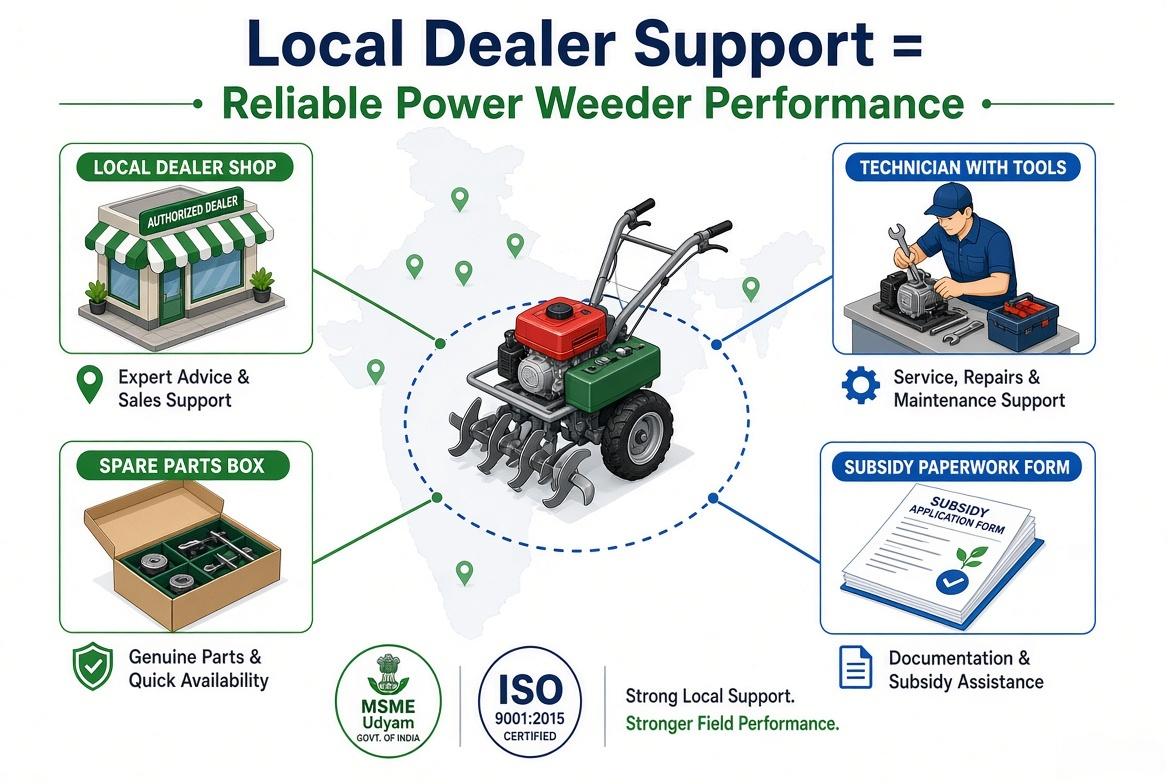
A power weeder’s real-world value depends heavily on whether a working dealer sits nearby. Distance from service points and a shortage of trained local technicians are recurring, well-documented barriers to machinery upkeep in rural India, separate from how well-built the machine is. A weeder that can’t be serviced or supplied with spare parts loses its productivity advantage fast, regardless of its specifications on paper.
This is also where subsidy paperwork typically gets handled in practice. Most farmers apply through their dealer rather than navigating a state mechanization scheme directly, which makes dealer competence on paperwork almost as important as the machine’s certification itself.
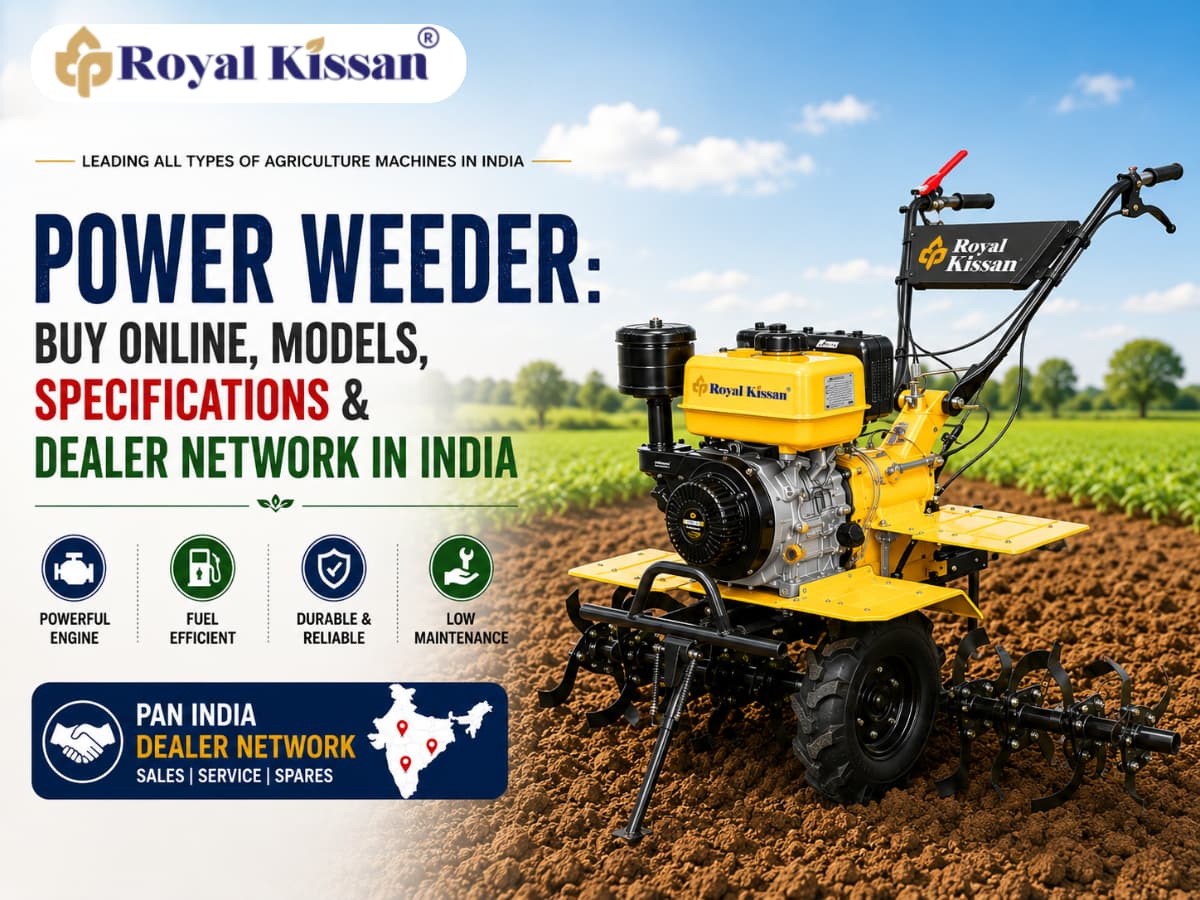
Royal Kissan’s dealership model addresses this directly: a pan-India dealer network, MSME Udyam registration (Udyam-MH-33-0070229), ISO 9001:2015 certification, and subsidy paperwork assistance handled through the dealer at the point of sale, rather than leaving farmers to navigate the scheme alone.
Royal Kissan Power Weeder Range
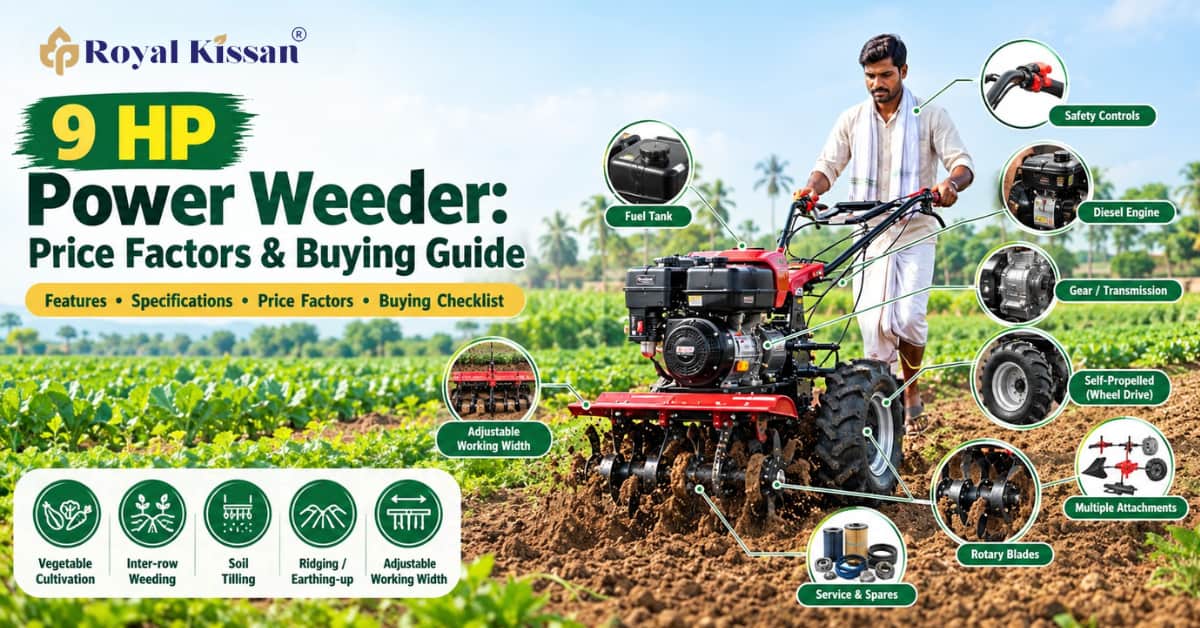
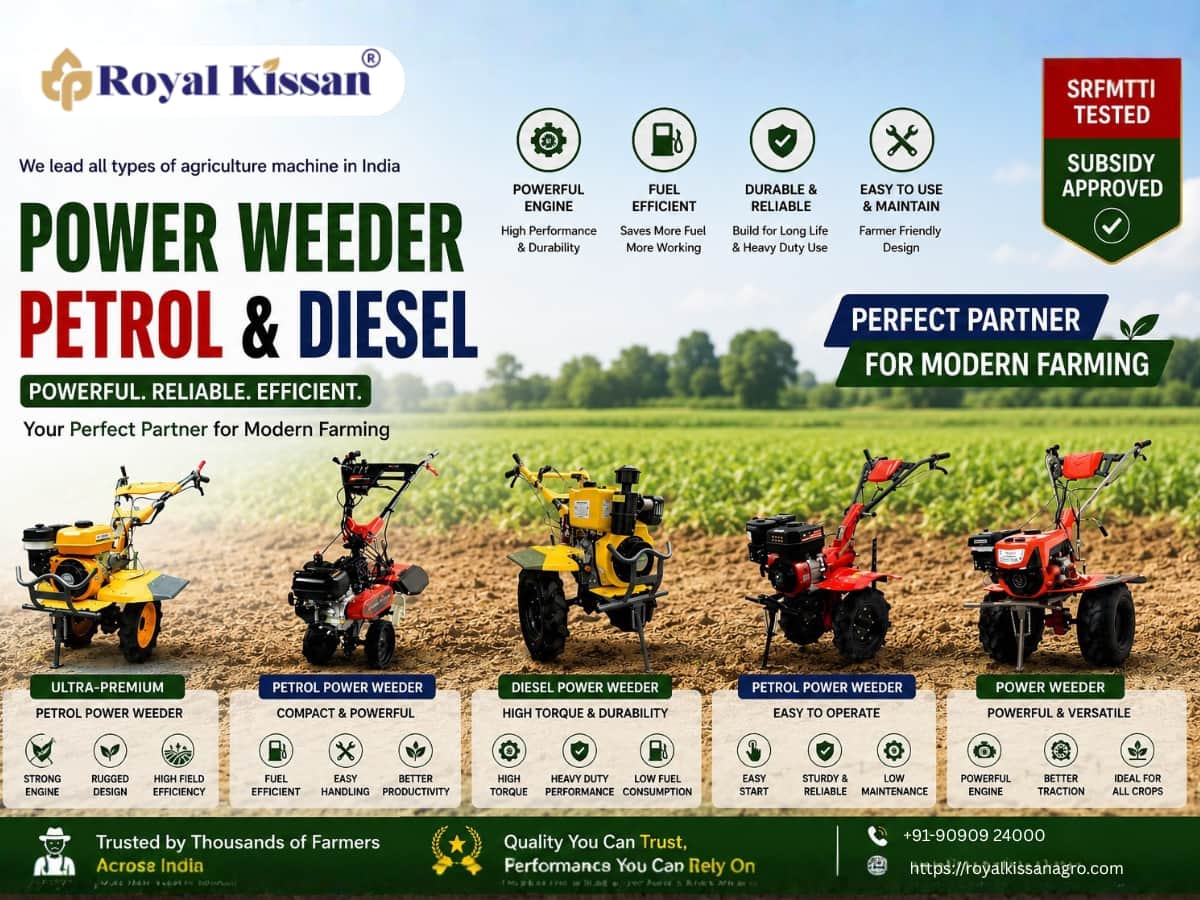
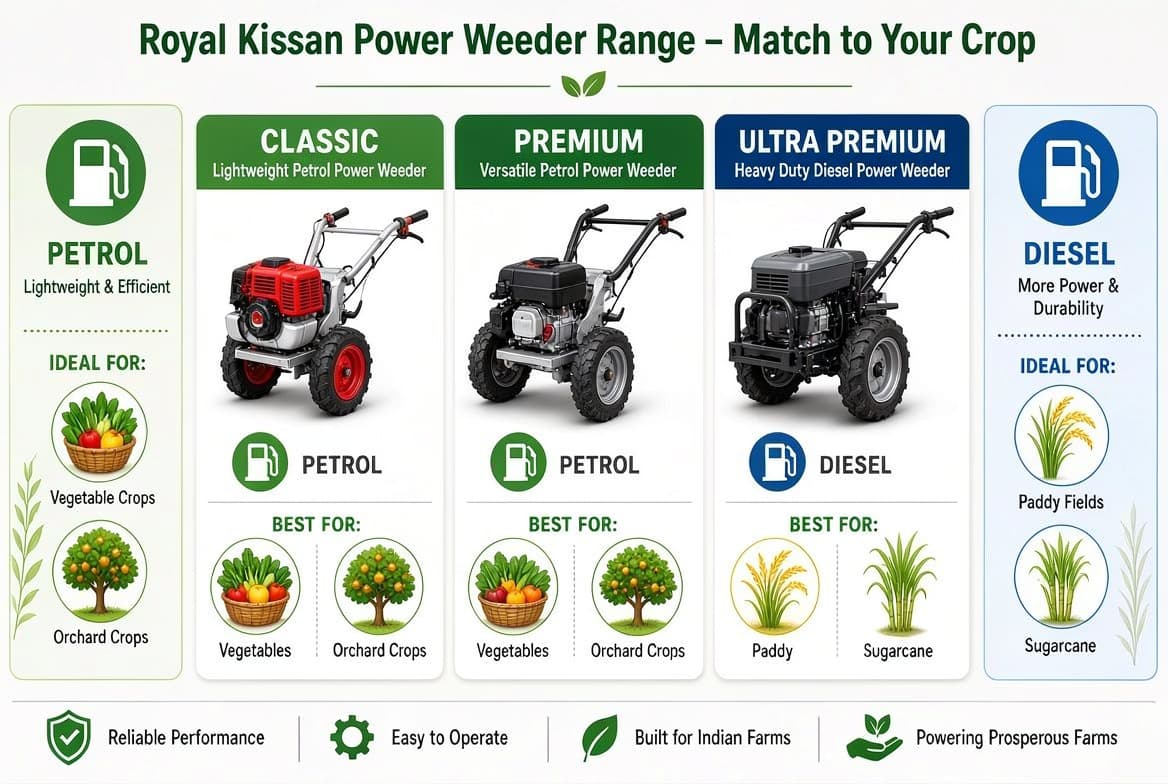
Royal Kissan manufactures power weeders across Classic, Premium, and Ultra Premium series, available in both petrol and diesel, with select models carrying FMTTI or SRFMTTI testing and subsidy-approved status. Lighter models suit vegetable farms, nurseries, and orchards with tighter row spacing; heavier diesel models suit paddy, sugarcane, and other heavy-soil operations that run long daily hours. Full model specifications and current pricing are available through the dealer network on enquiry.
Power Weeder Dealership: What to Check Before You Buy Online
- Certification on the specific model. FMTTI or SRFMTTI testing status, confirmed for the exact model you’re buying, not just the manufacturer in general.
- Subsidy eligibility. Confirmed with the local agriculture office or dealer, since approved lists and scheme percentages change over time.
- Manufacturer registration. MSME Udyam registration is a reasonable signal that you’re dealing with a genuine, recognized manufacturer rather than an unregistered reseller.
- Quality certification. ISO 9001:2015 or similar indicates a documented, consistent manufacturing process.
- Dealer coverage near you. Confirm there’s an actual serviceable dealer in your region before buying, not just a website that ships nationally.
- Fuel type matched to your field. Diesel for continuous, heavy-duty use in paddy and sugarcane; petrol for lighter, shorter-duration work on smaller plots.
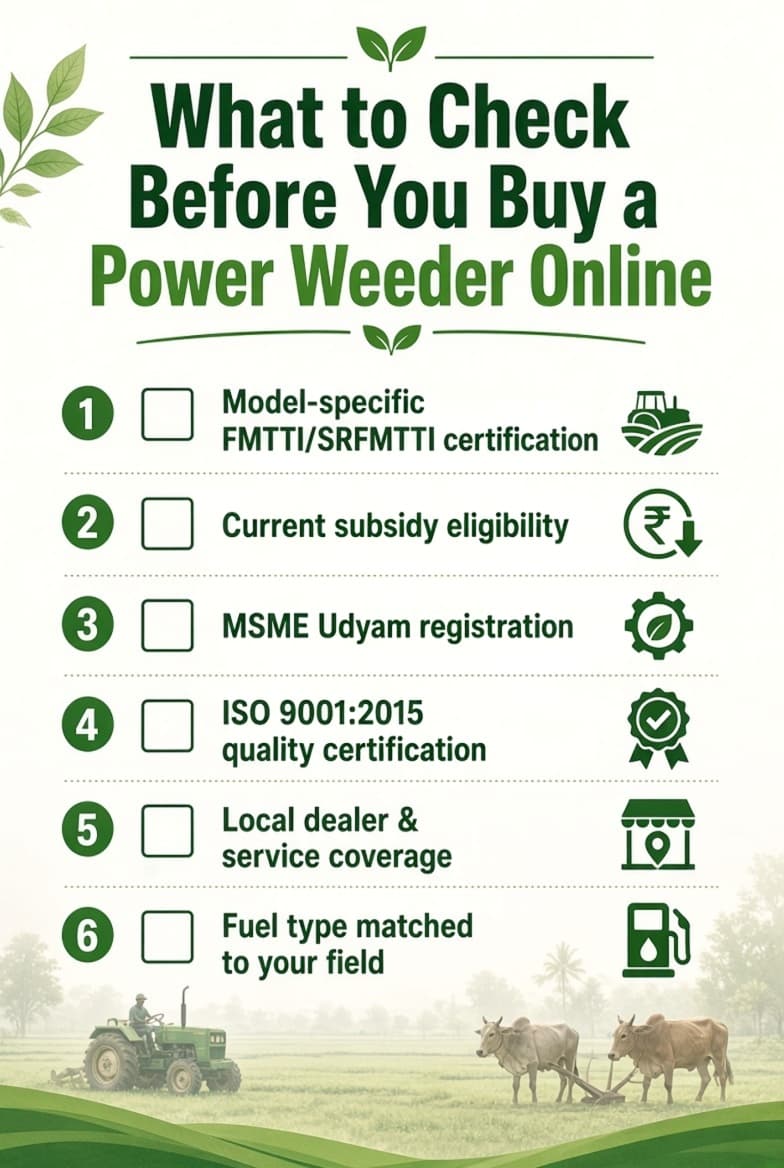
Six-point checklist for buying a power weeder online in India covering certification, subsidy and dealer support
Frequently Asked Questions
What is modern agricultural equipment in India?
Powered machines that replace or assist manual labor across the crop cycle, from large tractors and harvesters down to walk-behind machines like power weeders and power tillers built for small, fragmented landholdings.
How can Indian farmers improve their agricultural yield?
By targeting mechanization at the operations that still rely most heavily on manual labor, particularly weeding, rather than adding more tractors to a market that’s already showing signs of saturation. Access to affordable machinery through rental platforms, custom hiring centres, and dealer-supported subsidy schemes plays a direct role in this.
Is a 6 to 12 HP power weeder available from Royal Kissan?
Confirm the current HP lineup on the manufacturer’s live product pages before assuming a specific range is available, since published specs change as new models are added.
Why does the dealer network matter as much as the machine?
Servicing, spare parts, and subsidy paperwork all run through the dealer, not the manufacturer directly. A machine without local dealer support is harder to keep running and harder to get subsidized.
Are Royal Kissan power weeders eligible for subsidy?
Several models are, including FMTTI and SRFMTTI tested units. Eligibility and approved model lists vary by state and change over time, so confirm current status with your local agriculture office or dealer before applying.
Related Blog
-
Best Power Weeder Manufacturers in India
-
Power Weeder Petrol and Diesel, Royal Kissan
-
Power Weeder 5-9 HP
-
Best Power Tiller Price in India
-
Diesel Power Weeder Price
-
Power Weeder with Attachment: A No-Nonsense Guide for Indian Farmers
-
Why Every Indian Farmer Associates Himself With the 7HP Power Weeder