
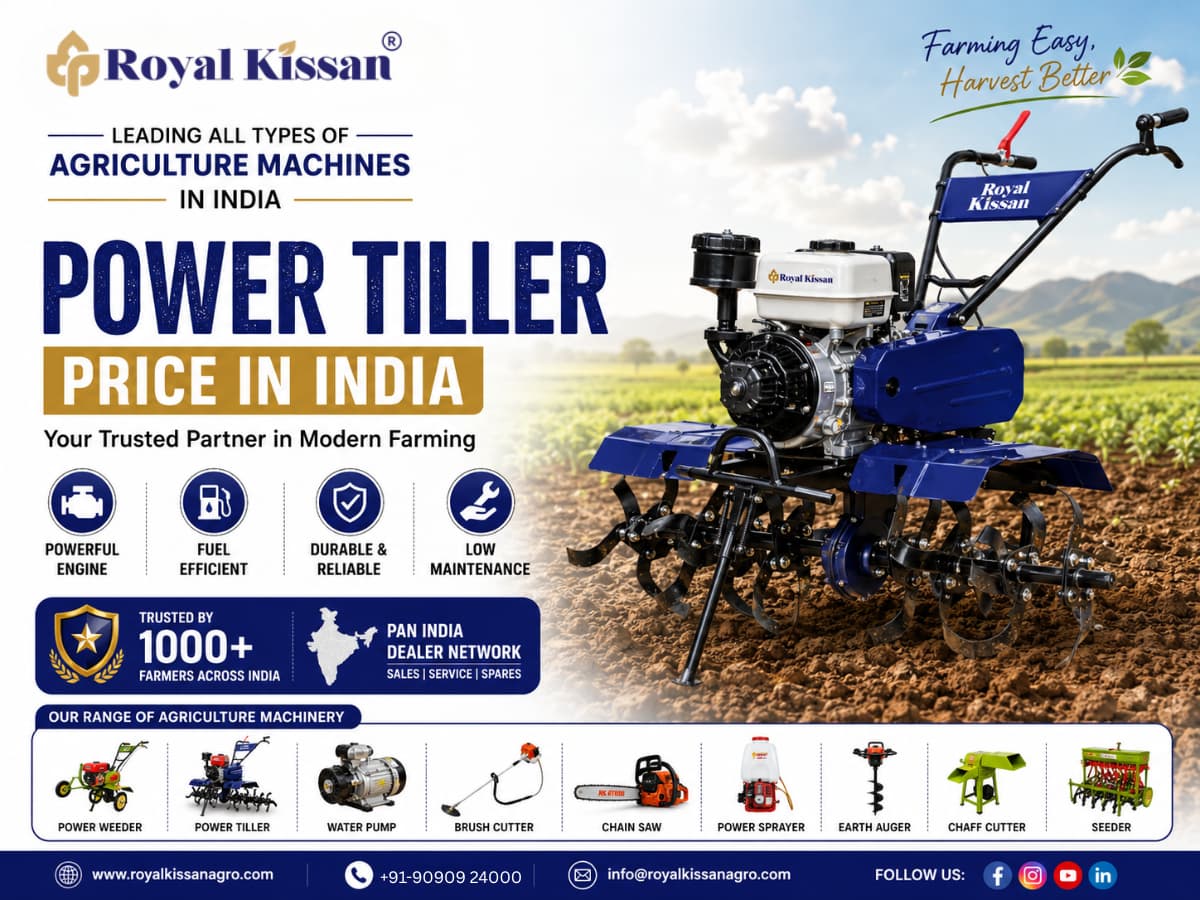
Power Tiller Price in India 2026: Full Buying Guide
Power tillers in India go for anywhere between ₹45,000 and ₹3,00,000. Horsepower moves that number the most, but fuel type and build quality push it around too; a small 2–5 HP model for a kitchen garden sits near the bottom; a 9–15 HP diesel tiller for wet paddy land sits near the top. This guide covers pricing, how to size up a manufacturer, HP ranges, the problems that actually show up in the field, and what to buy if weeds, not soil prep, are your real headache.
What Is a Power Tiller?
It’s basically a walking tractor: a self-propelled, two-wheeled machine that turns soil, works in fertiliser, and gets land ready before sowing. Cheaper than a tractor, easier to handle too, and a lot faster than doing it by hand. Smaller versions built mostly for weeding between crop rows, rather than full tillage, usually get sold as “power weeders” instead. That line gets blurry around 5–9 HP, where a lot of manufacturers put the same machine under both names.
Power Tiller Price in India
|
Category |
HP Range |
Typical Price (₹) |
|
Mini power tiller / cultivator |
2–5 HP |
25,000 – 65,000 |
|
Petrol power weeder (small farm) |
5.2–7.4 HP | 45,000 – 90,000 |
|
Diesel power weeder (heavy duty) |
5.4–10 HP |
60,000 – 1,20,000 |
| Standard power tiller (paddy/wetland) | 9–16 HP |
1,10,000 – 3,00,000 |
Diesel costs more upfront than petrol but usually runs cheaper per hour once you’re using it hard. Electric start and shock-absorber handles cost more than a basic recoil-start setup. A manufacturer with wide dealer coverage offers the convenience of having someone nearby to service the machine. Attachments, cage wheels, pumps, ridgers, and sprayers are almost always sold separately.
Treat these as a starting point, not a quote. Confirm the actual on-road price with a dealer near you, since freight and state charges shift it around.
What to Actually Compare When Choosing a Manufacturer
Forget hunting for a single “best” brand. A more useful way is to look at what each manufacturer actually offers on the ground. Does their model line cover both petrol and diesel, or are you locked into one fuel type from the start? How many of their dealers actually serve your district, not just the state? And when a part wears out, are you dealing with a local dealer who can turn it around fast, or an online marketplace that undercuts on price but can’t match that speed?
Bigger, tractor-pedigree manufacturers tend to dominate the heaviest wetland tillers (9–16 HP) and carry the deepest dealer bench nationally. Smaller or more focused agri-machinery makers fight hardest in the 2–8 HP range instead, where a wide model ladder and solid local dealer support count for more than sheer company size.
What Type of Tiller Is Best?
Depends on your soil, not on which machine looks strongest on paper. Petrol, air-cooled models are light and easy to start, a good fit for small plots, vegetable fields, orchards, anywhere you’re moving the machine around often. Diesel trades some of that lightness for torque and better fuel economy across a long day, which is why it’s the default for wet paddy puddling and heavier soils.
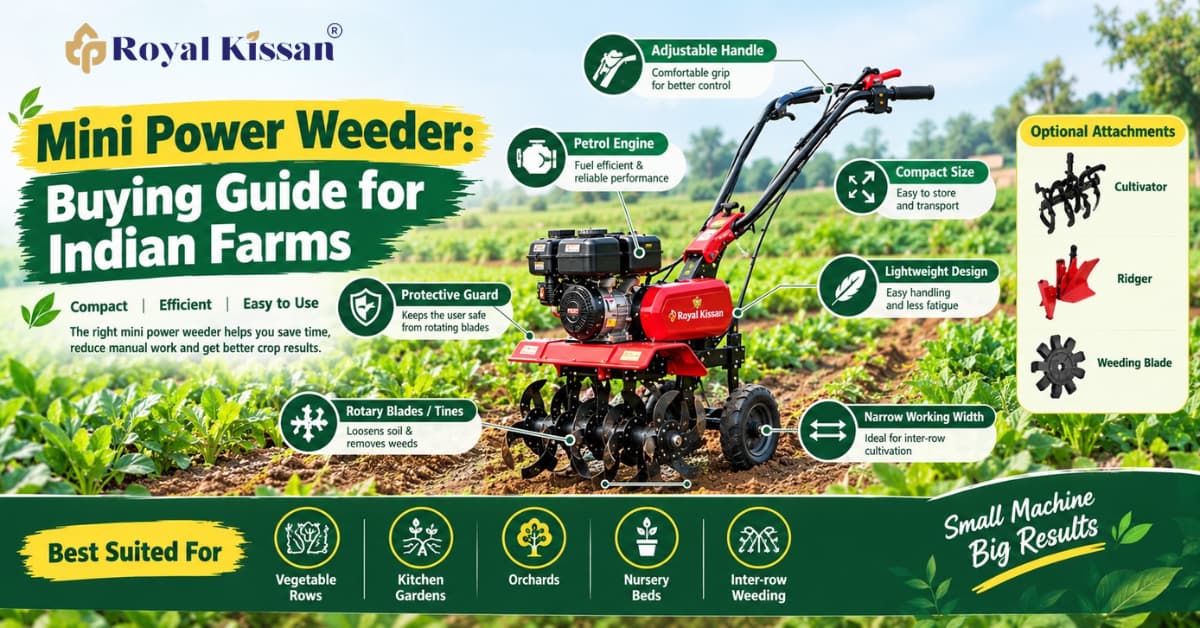
Mini inter-cultivators (2–5 HP) aren’t built for breaking new ground; they’re for working between existing crop rows, orchards, vineyards, nurseries. Once you’re preparing a larger plot from scratch, especially anything clay-heavy or wet, you’re into standard or heavy tiller territory at 9 HP and up.
Normal HP Range of a Power Tiller
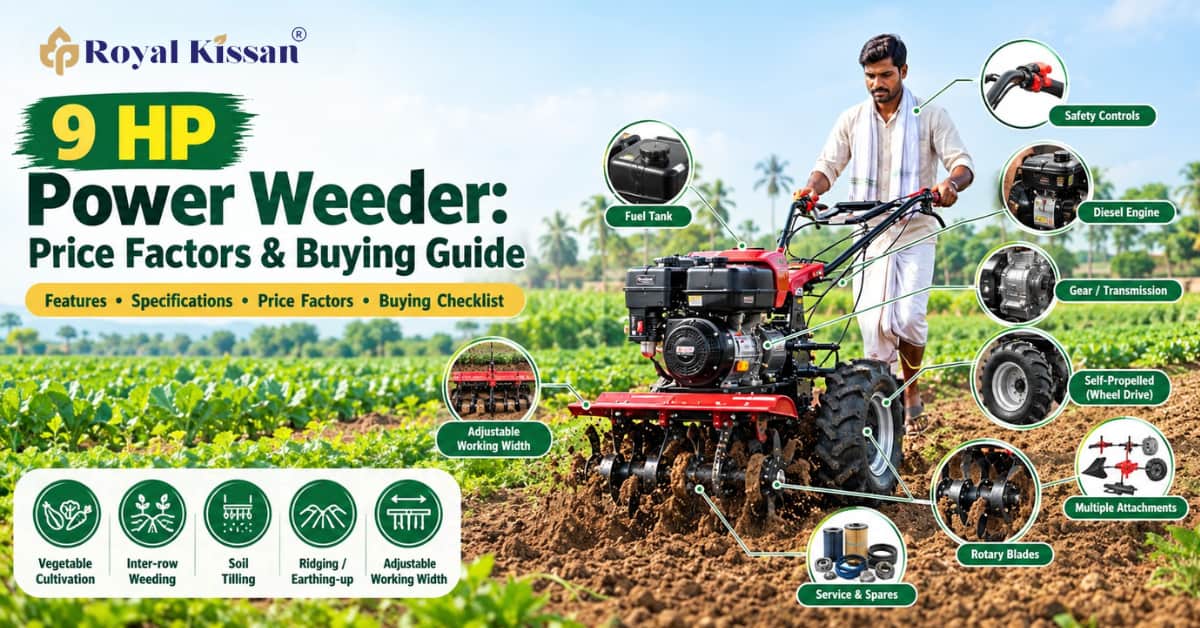
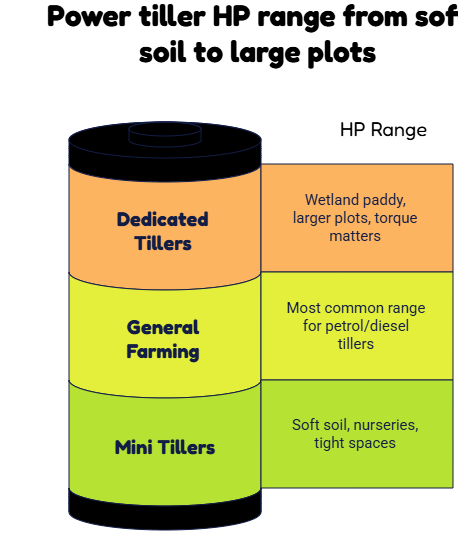
Most machines sold in India fall somewhere between 5 and 16 HP. At the low end, 1.9–5 HP covers mini tillers and baby weeders built for soft soil, nurseries, and tight spaces. The 5.2–8.2 HP band is where most general farming happens, and it’s the most common range for petrol and diesel power weeders. Above that, 9–16 HP is dedicated tiller territory, for wetland paddy and larger plots where torque and tilling width matter more than how easy the machine is to steer.
Common Problems with Power Tillers
Starting trouble after the machine sits idle for a season, usually stale fuel or a carburettor that needs cleaning. Blade and tyre wear on stony or compacted ground, worse on the thinner blade sets that come with entry-level models. Vibration and handle fatigue on long shifts, especially with base-spec handles that skip the shock absorbers. Delays getting genuine spare parts when a manufacturer’s dealer coverage happens to be thin in your area. None of this is specific to one brand.
It really comes down to two things: how well the machine is maintained, and how close you are to a dealer actually stocking real parts. That second one matters more than people give it credit for. A manufacturer with a wide, active dealer network gets you back in the field faster simply because the dealer already has the filters, blades, and gaskets that wear out sitting on a shelf, not waiting on a shipment. When you’re sizing up a manufacturer, that’s the question worth asking directly: how are routine parts stocked in your district? It’ll tell you more about real downtime than any spec sheet.
Best Tiller for Removing Weeds
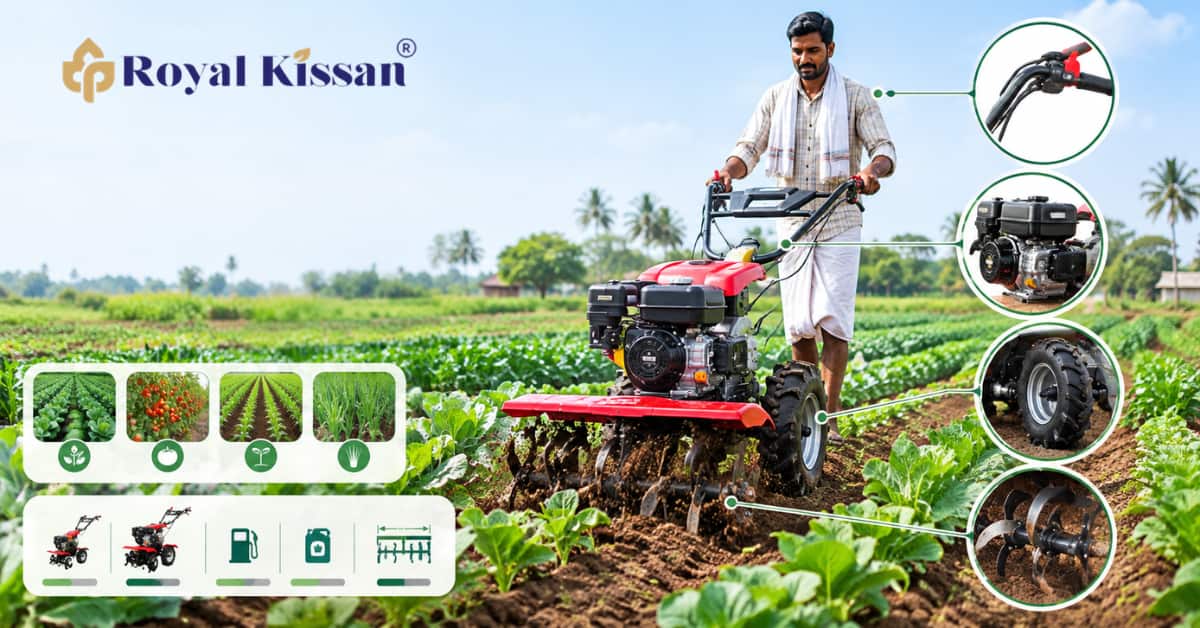
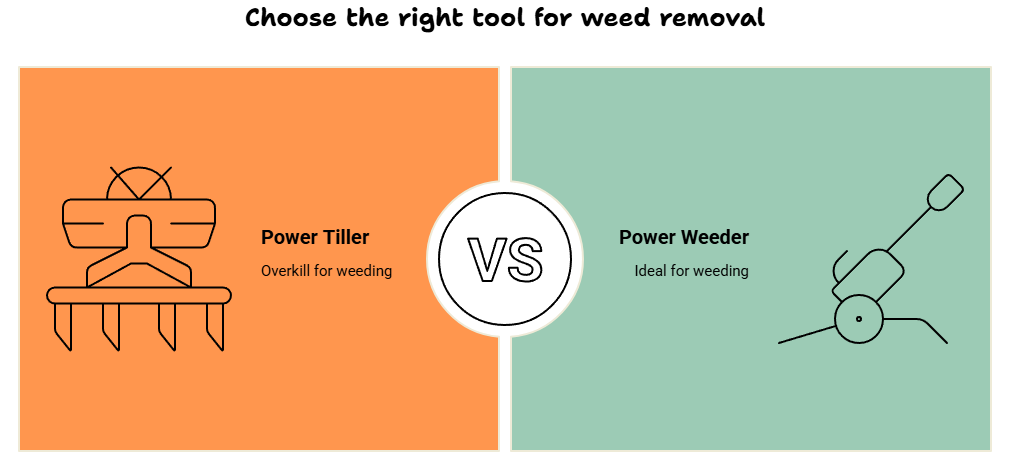
If weeds are the actual problem, a full-size power tiller is overkill. A power weeder does the job with less fuel and less fatigue, lighter, faster-turning, and built specifically for surface and inter-row weeding instead of deep tillage.
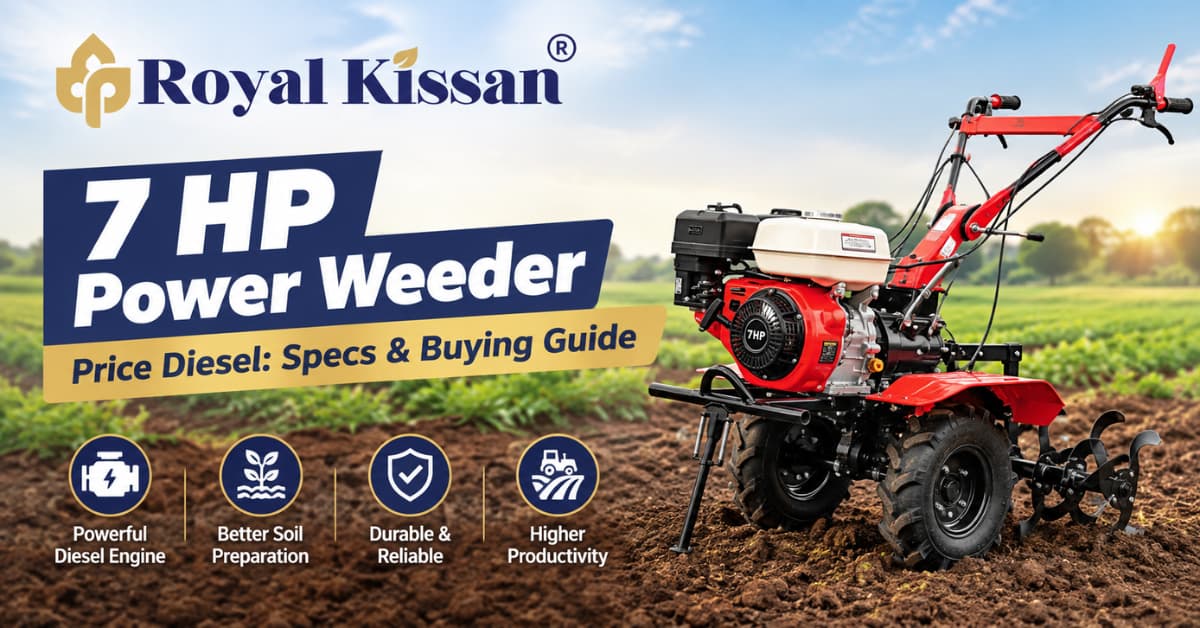
A 7 HP petrol power weeder is the sweet spot for most small-to-medium farms, enough power to cut through established weeds and aerate soil, light enough that one person can run it all day. Weeding between established row crops like sugarcane or vegetables calls for a step up to a back rotary power weeder (rear-mounted rotary blades), since the rear rotary action clears growth close to the plant base without disturbing the roots.
Look for a manufacturer offering both in a petrol-and-diesel range, so you can match the HP to your plot instead of buying a full tiller for what’s really just a weeding job.
FAQs
What does a power tiller cost in India?
Roughly ₹45,000 for a small petrol power weeder, up to ₹3,00,000 for a heavy-duty 15–16 HP diesel tiller. Most small and medium farms land in the ₹60,000–₹1,20,000 range with a 5–9 HP model.
Petrol or diesel, which is better?
Petrol works well on a small plot with frequent starting and stopping. Diesel makes more sense for long days or wetland paddy puddling, where torque matters more than weight.
What HP do I need for a 1-2 acre farm?
A 5–7 HP petrol or diesel power weeder covers most 1-2 acre farms. Only go past 9 HP for wetland paddy or genuinely compacted soil.
Does diesel or petrol need more upkeep?
Both need the same basics: air filter, oil, blades. Diesel engines usually stretch longer between services, but they’re pickier about clean fuel.
Can one machine till and weed?
Yes, most 5–9 HP power weeders handle light tilling and inter-row weeding once you swap the right attachment on. That’s exactly why this HP band sells the most in India.
Summary
Power tillers in India run ₹45,000 to ₹3,00,000 depending on HP, fuel type, and build. Most farms do well in the 5–9 HP range; bigger 9–16 HP diesel tillers are for wetland paddy and large plots. When comparing manufacturers, dealer density and spare parts availability matter more than the spec sheet. For weed-heavy fields, a 7 HP power weeder or a back rotary power weeder is a better tool than a full tiller.
To Know More Visit This Link – https://royalkissanagro.com/best-power-weeder-manufacturers-india/