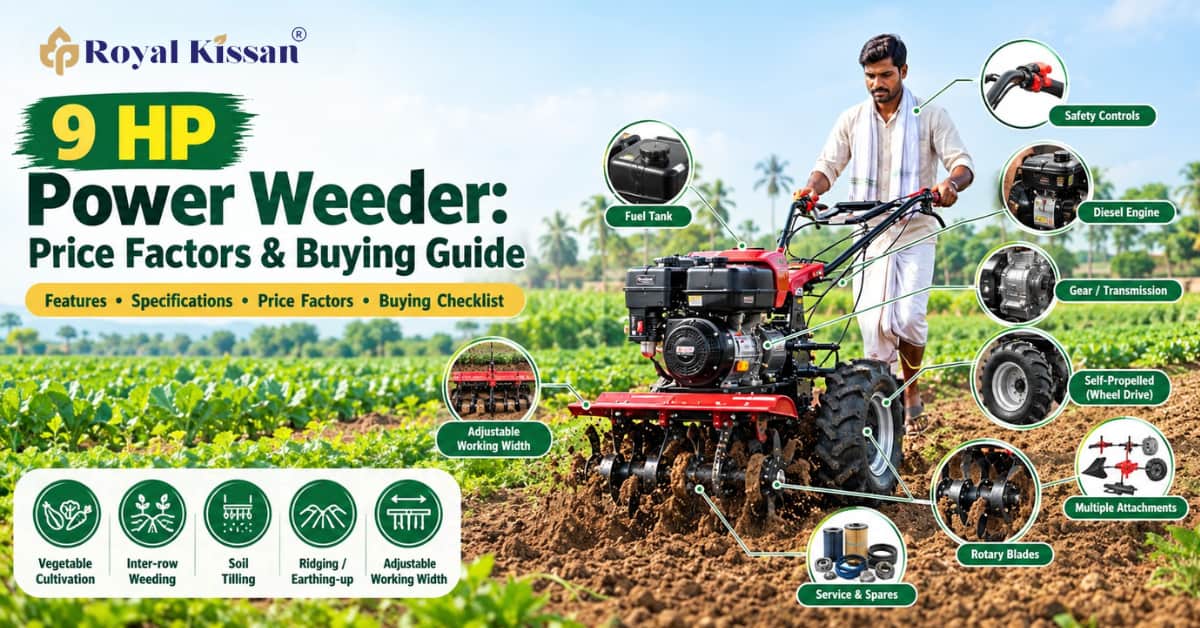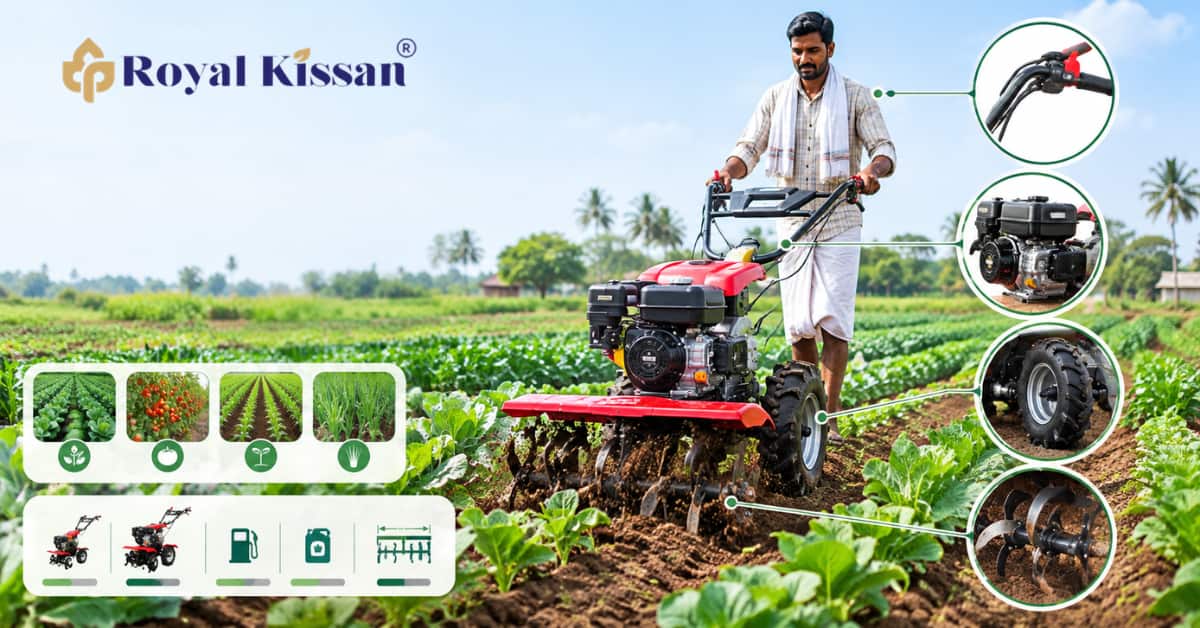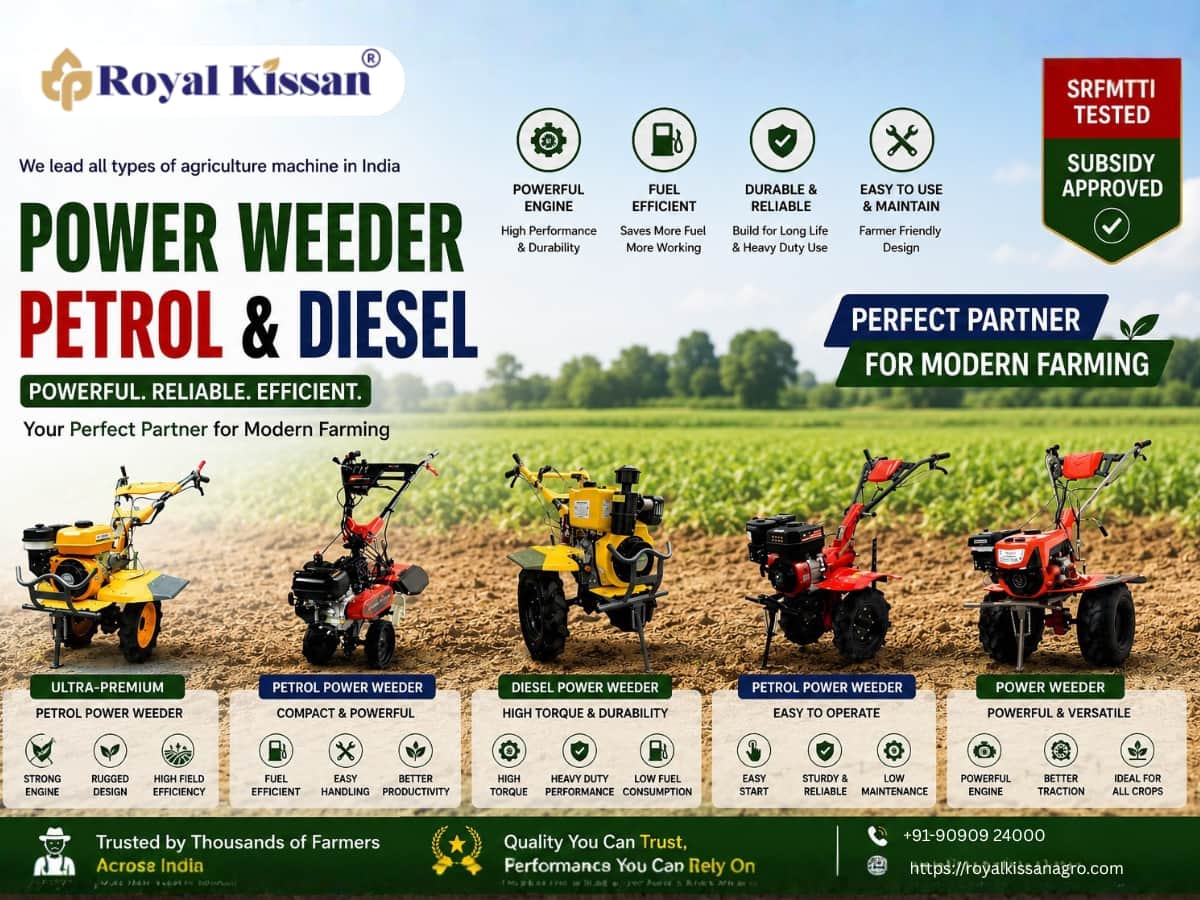

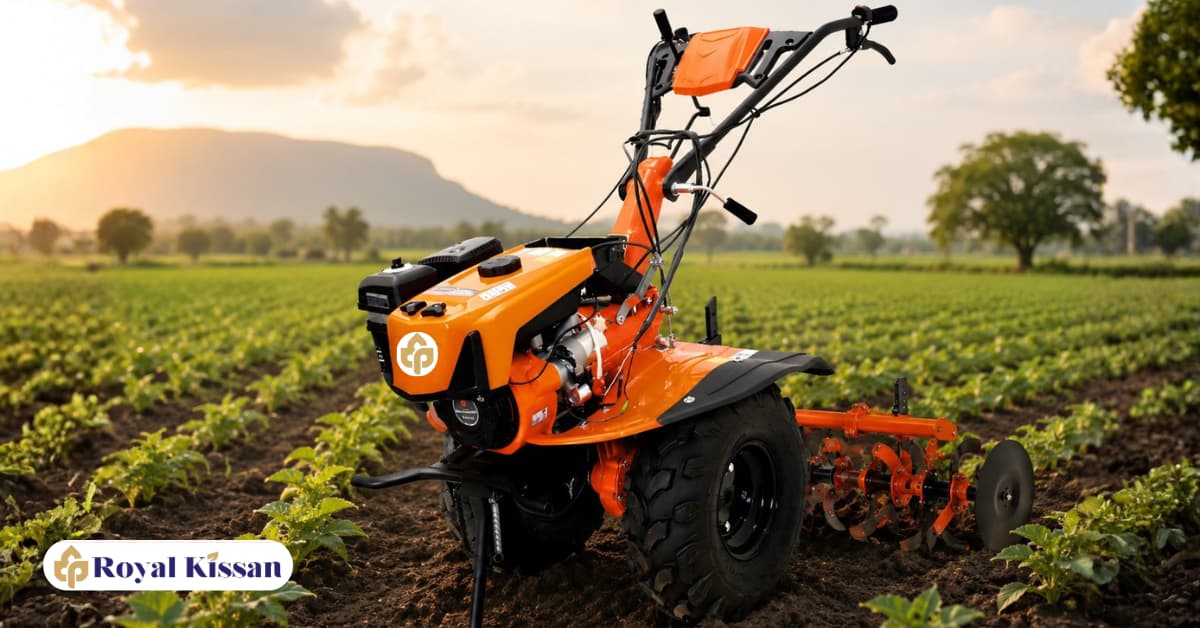
Ask any farmer who has done a full day of hand-weeding what the worst part of farming is. Nine out of ten will not even hesitate. It is not the sowing. It is not the harvest. It is that endless, back-breaking crouch across every row, every two weeks, season after season. And the moment you finish, the weeds are already coming back.
That frustration is exactly what pushed Indian farmers toward power weeders. Not some fancy marketing campaign. Just tired backs, rising daily labour wages, and the simple math of “there has to be a better way.” This guide is for farmers who are seriously thinking about making that switch — or who already have a machine and want to get more out of it with the right attachments.
No fluff. No list of features you already know. Just what matters.
Buy Power Weeder Attachments Online
What Nobody Tells You Before You Click “Buy”
Walking into a local agri shop and asking for a power weeder attachment is a bit of a gamble. Half the time, they have two options, neither of which is quite right for your machine, and the salesman shrugs when you ask about spare part availability six months later.
Online is genuinely better now. all have hundreds of verified sellers listing the full range — cultivator blades, fiber ridgers, paddy cage wheels, iron wheels, water pump add-ons, and more. Royal Kissan Agro’s own website at royalkissanagro.com ships Pan-India and lists their full catalogue of attachments. What you find online is simply not sitting in most local shops.
But before you order anything, there are a few things worth slowing down for:
HP Compatibility — get this wrong, and you will regret it. People buy the wrong attachment more often than you would think. An attachment made for a 5 HP engine is not going to fit a 7 HP or 9 HP machine properly — the shaft sizing, bolt patterns, and torque tolerances are different. Before anything else, check the HP compatibility for your specific model. Not just the HP number — the actual model. Write it down and match it.
What the Blade Is Made of Matters More Than the Price: Iron or hardened steel blades will take a full season in rocky, clay-heavy soil and still hold an edge. A cheaper zinc alloy blade sounds like a deal until it bends in the second month, and you are hunting for a replacement mid-season. Buy the slightly more expensive blade once, not the cheap one twice.
Spare Parts Availability — the question most people forget. A machine is only as good as its ability to keep running. Before buying, ask directly: Does your brand have a service centre within 50 kilometres? Can you get a replacement blade or clutch part in under a week? If the answer is no, think twice — breakdowns do not wait for convenient timing.
For the 7 HP cultivator attachment specifically, it lists machines and compatible add-ons for intercultivation and plantation use — worth checking if that is your crop type.
Benefit of Power Weeder
What Actually Changes on Your Farm After You Buy One
It is easy to say “saves time and labour.” Every product says that. So let us be specific — because the benefits of a good power weeder are more concrete than that, and they stack up in ways that genuinely change your farming year.
The Labour Cost Maths Hit Differently When You Run the Numbers: One labourer in India needs around 8 to 10 hours to weed a single acre by hand. When you have 3 or 4 acres under cultivation and weeds need clearing every 12–15 days during the growing season, you are hiring multiple people, multiple times, across multiple months. Daily agricultural wages are not what they were five years ago. A power weeder wipes out most of that recurring cost. The freed hours go toward irrigation, pest management, or simply being able to take on more land without adding headcount.
Your Soil Starts to Behave Differently — Well, Most farmers expect weed control. What catches them off guard is how differently the soil behaves after regular mechanical weeding. Loosening the topsoil between rows does something important — it opens up the soil so water does not just run off or pool. Air gets in. Roots push deeper instead of spreading sideways in the surface layer. Nutrients move more freely. Farmers who have been using a power weeder for two or three seasons consistently report that their crops look healthier and hold up better during dry spells. The weeder is doing more than you think.
Small and Marginal Farmers Can Actually Afford This Now. The earliest power weeders in India were priced out of reach for most small holdings. That is no longer the case. Mini models start at around ₹20,000, and a solid 7 HP machine lands around ₹55,000–₹65,000 depending on the brand and engine. Layer in the 30–50% subsidy available through state agriculture departments, and the numbers shift considerably. For a 2-acre vegetable farmer, this is no longer an aspirational purchase.
One Machine That Does the Work of Several — If You Pick the Right Attachments. The base machine is just the beginning. Add a ridger, and you are making raised beds for groundnut or sugarcane without a separate implement. Add a water pump attachment, and you have a light irrigation unit on the same chassis. Add a reaper for horticulture farms, and you are harvesting flowers or herbs with the same engine that weeds your rows. This is not marketing language — it is genuinely what a well-chosen power weeder setup looks like in practice.
You Stop Depending on Chemicals to Keep Weeds Down. This one matters more than farmers realise until they sit down and look at their input costs. Herbicides are expensive. They also break down your soil biology over time and contaminate groundwater when they run off during heavy rain. Switching to mechanical weeding is not just environmentally responsible — it is financially smart. Your soil quality improves year on year, and your input bill shrinks.
It Works on Rice, Vegetables, Orchards, Sugarcane — Basically Whatever You Grow. Adjustable blade widths mean you can set the working width to match your row spacing, whether you are in a paddy field, walking between banana trees, or working through a vegetable plot. You are not forcing a fixed machine into your farm layout — you are adjusting the machine to fit what you actually grow.
Advantage and Disadvantage
The Honest Version — Not the Brochure Version
Where a Power Weeder Genuinely Delivers
Speed is the most obvious one. A machine that can cover ground continuously for 5 or 6 hours without fatigue is simply doing more than any team of manual labourers can match at comparable cost. For a farmer who has spent years bent over rows for hours, operating a walk-behind weeder upright with ergonomic handles is a physical relief that is hard to overstate. Your knees, back, and shoulders will thank you within the first week.
The precision is real, too — when you set the blade width correctly, the machine moves between crop rows without touching the stems. You are removing weeds without damaging what you planted. That kind of control is difficult to get with hand tools when you are tired on hour six.
The investment pays back faster than most people expect. Most farmers who track it properly recover their full purchase cost within one to three growing seasons, purely through reduced labour spending. And the side benefit — less herbicide use — keeps paying quietly in the form of better soil health year after year.
What You Need to Go In Knowing
The price is not small for a marginal farmer, even with subsidies. That is just reality. Plan for it, apply for the subsidy early, and treat it as a capital expenditure rather than an expense.
Timing is something new users often get wrong. A power weeder does its best work when weeds are young — a few centimetres tall, shallow-rooted, easy to uproot. If you wait until the weeds are established and the roots have gone deep, you will be working much harder for much less result. Build a weeding schedule and stick to it.
Weeds that grow right at the base of the crop stem — within the row itself — still need hand removal. The machine handles between-row weeding extremely well, but it cannot reach the last few centimetres next to each plant. Factor that in.
Petrol models need upkeep. Oil changes, spark plug servicing, air filter checks — they are not complicated, but they are non-negotiable. Skip maintenance for a season, and the machine will show it. Diesel models sidestep some of that but cost more upfront.
Finally, do not over-till. Used sensibly, a power weeder improves your soil. Used too aggressively or too frequently in the same field, it can break down soil structure and increase erosion risk. Combine it with minimal tillage practices — work only as deep and as often as the crop actually requires.
Key Applications of a Power Weeder
All the Jobs One Machine Can Actually Do
Most people hear “power weeder” and think it is a single-purpose machine. That assumption costs them money because with the right attachment lineup, a power weeder does work across the farming calendar, not just during the weeding window.
Weed Removal Between Crop Rows: This is the main job — and it does it well. The rotating blades or tines move between planted rows, uprooting weeds before they compete seriously with your crop for water, sunlight, and nutrients.
Breaking Up Compacted Soil Between Rows: Soil between rows gets compacted from foot traffic, irrigation, and rain. The weeder’s rotating action breaks those clumps apart, improves water penetration, and gets air back into the root zone. Your crop roots benefit from this even on passes where there are barely any weeds to remove.
Preparing Seedbeds Before Sowing: Some models — particularly the higher HP ones — can prep the topsoil before the seed goes in. It is a lighter operation than what a power tiller does, but for vegetable plots and raised beds, it is often all you need.
Making Ridges with a Ridger Attachment Clip on a ridger, and you can form the raised rows that sugarcane, potato, groundnut, and similar crops need. The same machine. One extra attachment. No second implement pass needed.
Mixing Fertilizer Directly Into the Topsoil: Intercultivation attachments with wider blade profiles can incorporate top-dressing fertilizer as you pass down the rows. Instead of a separate fertilizer mixing step, it happens during your weeding run. Saves time, saves fuel, and the fertilizer gets worked in rather than sitting on the surface.
Earthing-Up Around Crop Stems: For maize and sugarcane, especially, building soil back up around the base of the stem gives the plant better physical support. This is one of those operations that is tedious to do by hand and quick to do with the right power weeder pass.
Small-Scale Harvesting with a Reaper Attachment: In horticulture — floriculture farms in particular — attaching a reaper lets you cut flower stems and herbs efficiently without switching to a separate machine. Not every farm needs this, but for the ones that do, it is a significant time-saver.
Water Pumping with a Pump Attachment: This one surprises people. Royal Kissan’s RK-PW-WP-P80 water pump attachment, for example, connects to compatible petrol power weeders and delivers up to 40 cubic metres per hour at up to 40 metres head pressure. One machine — weeding and irrigation both. Especially useful for small plots where owning a separate pump is hard to justify.
Crops that work well: Paddy, wheat, maize, sugarcane, groundnut, cotton, banana, mango, papaya, all major vegetables, and floriculture.
Why Choose Royal Kissan for Power Weeder Attachment
Why a Maharashtra Manufacturer Has Built a Pan-India Following Since 2020
Royal Kissan Agro started in 2020. That is not a long history by traditional farm equipment standards, but they have moved fast — from a small operation in Thane and Dombivli to a manufacturer and supplier with an annual turnover in the ₹25–100 crore range, an IEC export code, GST-verified operations, and customers across India.
What they did right early was focus on the attachment ecosystem, not just the machine itself.
You Can Build Out Your Setup Over Time — From One Supplier. Most competitors will sell you a weeder and then leave you hunting elsewhere for compatible ridgers, paddy wheels, water pumps, and iron wheels. Royal Kissan built its catalogue to work together. J-type rotary blades, fiber ridgers, paddy cage wheels, iron wheels, simple levelers, water pump units — all from one place, all confirmed compatible with their machines. That matters when you are expanding what your weeder can do over three or four seasons.
Their 7 HP Machine Gets Real Use in Real Conditions. The Royal Kissan 212CC Petrol Power Weeder runs a 4-stroke 212cc engine. What stands out in farmer feedback is the shock absorber — it cuts vibration through the handles meaningfully over a long working day — and the 360-degree steering that makes turning in tight spaces between rows much less of a wrestling match. It handles wet fields, dry cracking soil, and muddy post-rain conditions without needing to swap anything out. That kind of reliability across terrain types is not a given in this price range.
Quality Control Is Not Just a Brochure Line Here: Every product goes through internal QC before it ships — checking design tolerances, build finish, and durability under load. The raw material comes from verified vendors, and the manufacturing team stays updated on technique improvements. For a company that is still relatively young, the consistency in product quality is notable. Customer reviews on IndiaMART bear this out.
The Pricing Is Transparent: The NB-178F Diesel Power Weeder is listed at approximately ₹62,000. Attachments like the fiber ridger and J-type rotary blade are priced for individual buyers and bulk buyers both — no confusing “call for price” on basic items. Their IndiaMART listing carries a verified Trust Seal with GST No. 27ABAFR6796F1ZS and IEC Code ABAFR6796F. For a buyer doing due diligence, that level of transparency is reassuring.
What Is a Power Weeder Used For?
Simple answer: it is a secondary tillage machine that handles weed removal and soil maintenance while your crops are already in the ground. A full-sized tractor is too big and aggressive for that job. Manual hand-weeding is too slow and too hard on the body at any meaningful scale. A power weeder sits exactly in that gap — precise enough to work between standing crops, powerful enough to cover real acreage in a day.
The core job is inter-row weeding — clearing the competition so your crop gets the water and nutrients it needs. But with attachments, it stretches into seedbed prep, ridge formation, earthing-up, fertilizer incorporation, light harvesting, and irrigation pumping.
It gets used across paddy, wheat, maize, sugarcane, groundnut, cotton, banana, mango, papaya, vegetables, and floriculture farms. If weeds grow between your crop rows and manual removal is your current answer — this machine is for you.
What Is the Difference Between a Power Weeder and a Power Tiller?
Parked side by side, they can look nearly identical to someone who has not used both. But they are different tools built for different moments in the farming calendar, and mixing them up leads to buying the wrong machine.
|
Feature |
Power Weeder |
Power Tiller |
|
When You Use It |
After sowing, while the crops are growing | Before sowing, to prepare the land |
|
Engine HP |
3–8 HP |
8–16 HP or more |
|
Weight |
30–80 kg — easy to manoeuvre |
100–300 kg — built for heavy work |
|
Farm Size Fit |
Under 2 acres typically |
2–10 acres or more |
|
Fuel |
Mostly petrol |
Mostly diesel |
|
Soil Work Depth |
Shallow — top layer only |
Deep — breaks hard compacted layers |
|
Attachment Range |
Focused — mainly weeding tools |
Wide — ploughs, seeders, trailers |
| Price | More affordable |
Significantly more expensive |
The easiest way to remember the difference: a power tiller prepares your land before the seed goes in. A power weeder maintains your land after the plants are growing. Both have their place, but a small vegetable or horticulture farmer rarely needs both. The power weeder usually covers everything that matters.
How Do I Choose the Right Power Weeder?
Go through this honestly. Not what sounds good on paper — what matches your actual farm situation:
Farm Size First: If you are working less than 2 acres, a standard power weeder handles the job comfortably. Between 2 and 10 acres, you might want a higher-HP weeder or start looking at whether a power tiller makes more sense for primary operations.
Petrol or Diesel — Based on How Long You Run It: Petrol for smaller farms where the machine works a few hours and then stops. Diesel for farms where you are running the machine 5 or 6 hours a day — the fuel savings per hour add up quickly, and the diesel engine tends to last longer under that kind of load.
Horsepower — Match It to Your Soil: 5 HP handles vegetable plots and horticulture farms with reasonably cooperative soil. Move to 7 HP if your soil is heavy clay, if you are working on slopes, or if you need the machine to push through for long stretches without bogging down.
Attachments — Think About Year Two, Not Just Day One. Check what attachments are compatible with the model before buying. A weeder that cannot accept a ridger, reaper, or water pump later is locking you into a single use case. Buy into an ecosystem, not just a machine.
Handle It Before You Buy It If Possible. This is overlooked constantly. A machine you physically tried, even briefly, tells you things a spec sheet cannot. How does it vibrate at operating speed? How much effort does steering take? Can you operate it comfortably for 4 hours? Ergonomics matter when you are using a machine daily.
Service Network — Not Optional: Know where your nearest service centre is before purchasing. A machine that needs a spare blade or clutch adjustment during harvest season and has no local support is a liability. Prioritise brands with established service points or those that can ship parts within 2–3 days.
Apply for the Subsidy Before the Season Starts: Both petrol and diesel power weeders qualify for a 30–50% government subsidy through state agriculture departments. Apply at your district agriculture office or through your state’s online portal. This is not complicated — but it does take some lead time. Do not skip it. On a ₹55,000 machine, a 40% subsidy saves you ₹22,000.
Which Power Weeder Is Best — Petrol or Diesel?
Both work. The question is which one works for your specific farming situation.
Petrol makes sense when your farm is under 2 acres, you grow vegetables or orchard crops that need careful, precise operation in tight spaces, you want something lighter and easier to start on cold mornings, and your working day with the machine is 3–4 hours rather than 6–8. Upfront cost is lower. Maintenance is straightforward. Petrol is available everywhere.
Diesel makes sense when you are running the machine hard — 5 or 6 hours a day across a larger farm. Diesel engines consume less fuel per hour, which matters when you are adding those hours up across a full season. The engines are built to handle sustained load better, and they tend to outlast petrol units under heavy daily use. You pay more upfront, but the long-term operating cost is lower.
Quick version: petrol for lighter, smaller, precise work. Diesel for heavy, sustained, large-scale operations.
For the majority of small Indian farmers doing vegetable growing, orchard maintenance, or mixed horticulture on 1–3 acres, a petrol-powered 7 HP power weeder is where the value is. It is powerful enough to do the job properly, light enough to handle comfortably, and priced within reach even before the subsidy kicks in.