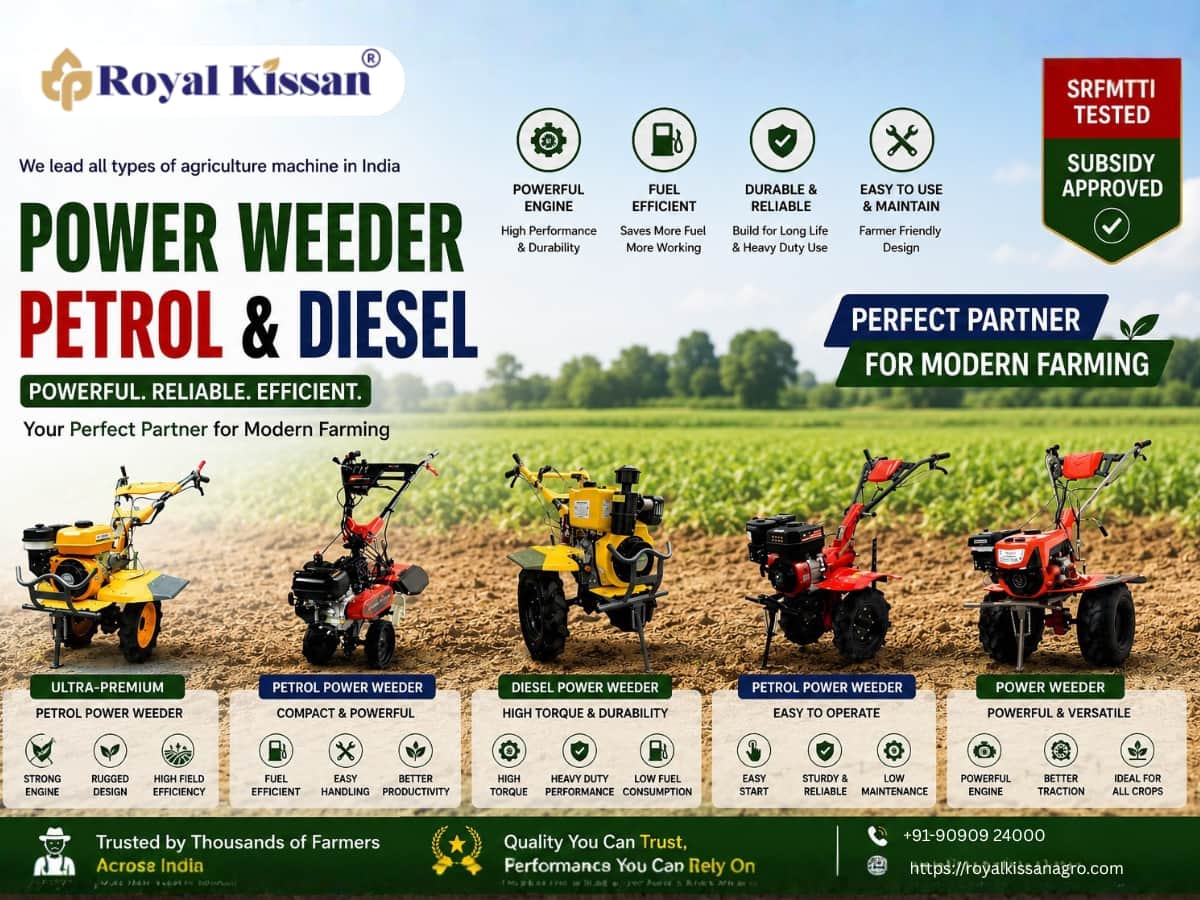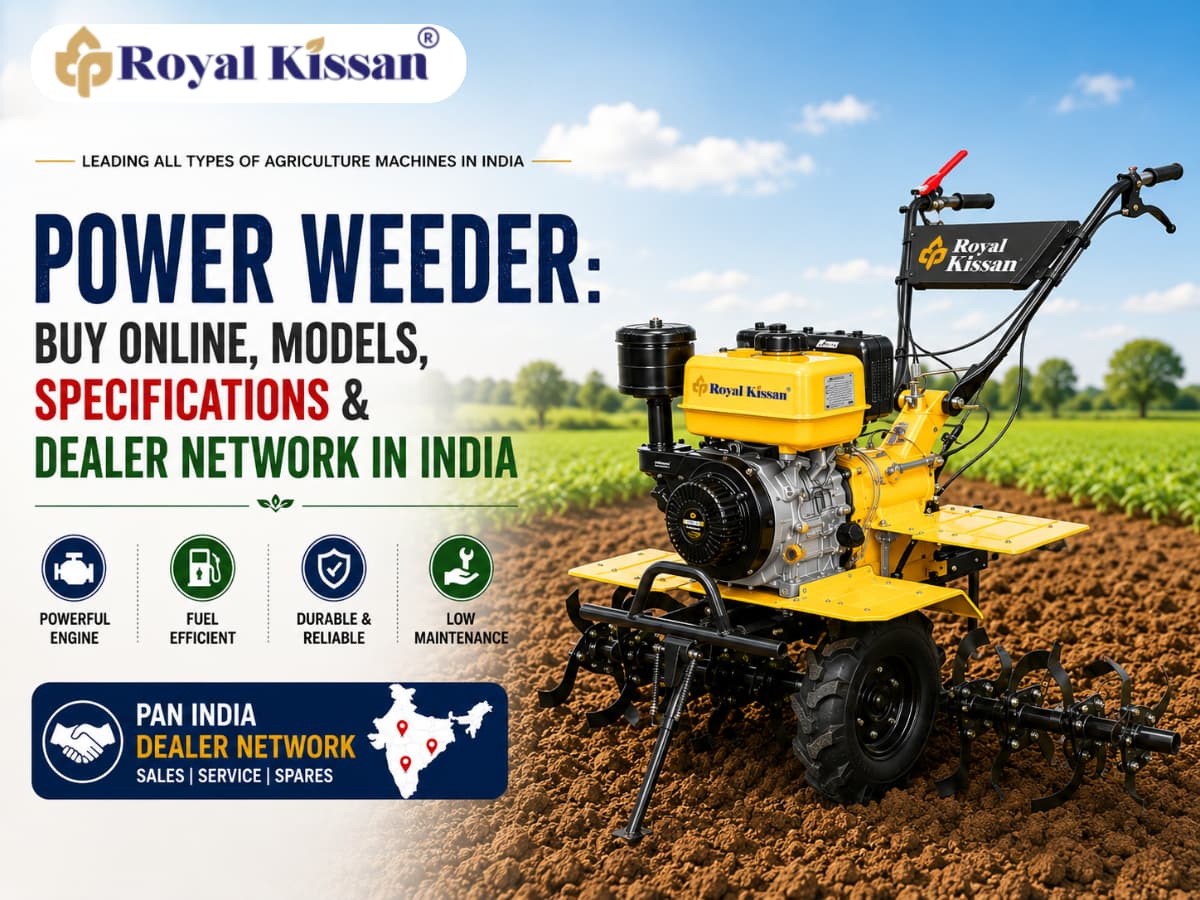

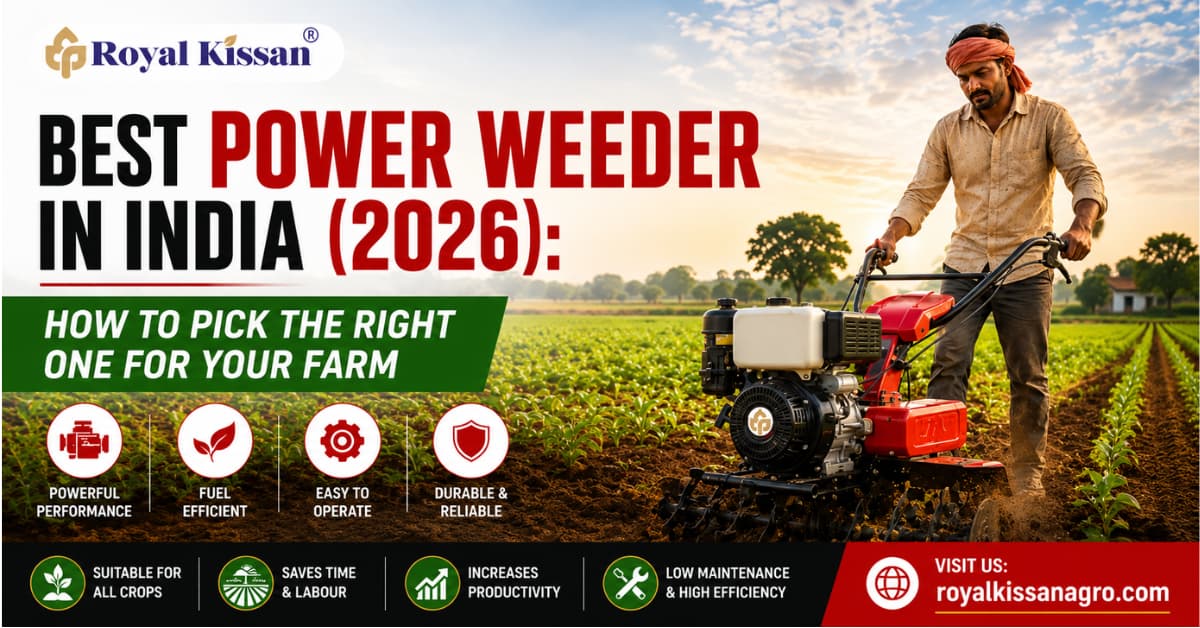
Best Power Weeder in India (2026): How to Pick the Right One for Your Farm
There is no single best power weeder in India. Anyone who tells you there is is selling you something. The right machine comes down to four things: your soil, your acres, your row width, and whether you need diesel pull or petrol handling. A 2 HP mini weeder and an 8.5 HP diesel machine are both “the best.” Just for very different farms.
This guide helps you work out which one is yours.
We build these machines, so weigh our opinion accordingly. But we’ve also written down where our competitors beat us, and we’ve put in the subsidy numbers, which is the part nobody covers, and the part worth the most money to you.
Why Every “Top 10” List Gives a Different Answer
Read four of them. You’ll get four different winners.
The writers aren’t being careless. The problem is the question. “Best” isn’t something a machine has. It’s a fit between a machine and a farm. Ask which weeder is best, and there’s no answer. Ask which weeder is best for two acres of hard black soil growing cotton, and suddenly there is one.
So work through four questions.
How much land? This sets your horsepower more than anything else does.
What kind of soil? Hard, stony, black cotton ground needs pulling. Loose soil doesn’t.
What crop, and how wide are the rows? Narrow rows rule out heavy machines. Doesn’t matter how good the engine is.
Petrol or diesel? That’s a question about how you’ll use it — not about which fuel is better.
Get those four right, and the machine chooses itself. Get them wrong, and the brand on the tank won’t save you.
One thing every good machine has
A test certificate. FMTTI or SRFMTTI — the government testing institutes.
Not because the paper does anything in the field. Because it’s what makes you eligible for a subsidy worth up to ₹63,000. If you read only one section of this page, make it that one.
Best Power Weeder by Farm Size
This is the first cut, and it removes most of the market straight away.
Under 1 acre — kitchen gardens, nurseries, terrace plots
You want a mini weeder, 2 to 3 HP. These run roughly ₹17,000 to ₹35,000. Royal Kissan covers this band well — our petrol range starts at 5.17 HP, right through to 5.5 HP, which is where most farmers in this segment land. RK FT 20 sits lower still — 1.8 HP, 87cc petrol, 16 blades, 40 kg, working width 600 to 1050 mm.
Light enough to carry. Not enough machines for anything serious. Perfect for a vegetable patch. Take it onto two acres, and you’ll be out there all week.
For very tight spacing — nursery beds, orchard rows — look at a mini inter-cultivator instead. It’s built for exactly that.
1 to 3 acres — the 5 to 5.5 HP band
This is where most farmers land, and it’s the busiest part of the market.
Royal Kissan covers this band well — our petrol range starts at 5.17 HP, right through to 5.5 HP, which is where most farmers in this segment land.
Our own petrol range starts at 5.17 HP with the RK-ICP-UP170-SH — SRFMTTI-tested, subsidy-approved, with a shock-absorber handle. That sounds like a small feature until you’ve held one for six hours.
At 5.5 HP, we have the NB-ICP-C170-LCE (FMTTI tested, subsidy approved) and the RK-ICP-P170-LDE, which has ATV tyres and electric start.
Electric start is worth more than the spec sheet admits. If a woman or an older family member is going to run this machine, pull-starting a cold engine every morning gets old fast. Our Tamil Nadu farmers ask for the electric-start models by name, and that’s why.
3 to 5 acres, or hard ground — 7 to 8.5 HP
Now you’re mostly looking at diesel, though good petrol machines exist here too.
Our RK-173F, 7 HP and 247cc, FMTTI tested, is built for exactly this range — solid pull with a gearbox that holds up under longer days.
On the diesel side, our RK-173F (7 HP, 247cc, FMTTI tested) and RK-ICD-UP186-SH (7.93 HP, SRFMTTI tested) are what get used in paddy and heavy soil. Our biggest machines — the NB-ICD-C186 and NB-ICD-C186-LCE — are 8.5 HP, 418cc. About as much machine as you can sensibly walk behind.
Above 5 acres, or 9 HP and up
Above 5 acres, or heavy-duty diesel territory
This is where our top-end range comes in. The NB-ICD-C186 and NB-ICD-C186-LCE are our biggest machines — 8.5 HP, 418cc, built with large-farm capability in mind. The LCE variant adds electric start, which matters when you’re running the machine for hours at a stretch across sugarcane, banana, or orchard ground.
About as much machine as you can sensibly walk behind.
Go much bigger than that, and you’ve left power weeders behind altogether — you’re into tractor-mounted rotary weeders, running off a 45 HP tractor, taking several rows per pass. Different machine, different money, different conversation.
Best Power Weeder by Soil and Crop
Farm size gives you the horsepower. Soil and crop give you the machine.
Hard, stony, or black cotton soil
Go diesel. Not preference — physics. Diesel engines pull harder at low revs, which is exactly what you need when the blades are fighting compacted ground instead of slicing through it.
You also want hardened steel blades. Soft blades round off in a single season on stony ground. You’ll feel it as the machine starts to ride over the soil instead of biting in.
Ask about blade grade before you buy. It’s the question sellers least want to answer, which tells you something.
Paddy and wet fields
Pull, again — plus weight that won’t sink you.
Our RK-173F and NB-ICD-C173-LSF do most of the work here. Both put out 4 kW at 3200 RPM, which is enough to keep pulling through wet monsoon soil hour after hour without bogging.
The double fender on the RK-ICD-UP186-SH matters in wet ground for a boring but real reason: it stops the machine from throwing mud at you all afternoon.
Royal Kissan machines are well suited to wetland work too — the RK-173F and NB-ICD-C173-LSF are built to keep pulling through wet monsoon soil hour after hour.
🖼️ Image: Diesel weeder working a wet paddy field alt=”7 HP diesel power weeder working in a wet paddy field during monsoon”
Vegetables, orchards, narrow rows
Go petrol, and go lighter. This is the one case where more horsepower actively makes things worse.
An 8.5 HP diesel machine at 418cc is a serious lump of iron. Point it down a row of tomatoes, and the extra pull buys you nothing, while the extra weight costs you everything — control, turning, and your back by the third hour.
Light and manoeuvrable is what wins here, not raw power. Our petrol range in the 5.17 to 5.5 HP band was built with exactly this in mind — the RK-ICP-UP170-SH comes with a shock-absorber handle, which matters more than it sounds once you’ve walked a few hours of narrow orchard rows, and the RK-ICP-P170-LDE adds ATV tyres and electric start for easier handling on uneven hill terrain. Both stay light enough to turn easily between tight rows without sacrificing the pull needed for tomato, chilli, or orchard-floor work.
Sugarcane and cotton
Wider rows, tougher soil, longer days. Diesel, 7 HP and up. And pay attention to tilling width — you want it matched to your row spacing, not simply “as wide as possible.”
Our NB-ICD-C178 series puts out 5.22 kW with a 4 L tank. It’s what our grape and onion growers in Karnataka settle on, and the demands are similar.
Petrol or Diesel? The Straight Answer
The internet will tell you diesel is always better. It isn’t.
Petrol wins when…
The work is lighter. The rows are narrow. Vegetables, orchards, horticulture. More than one person in the family runs the machine. Anywhere handling matters more than raw pull.
Petrol machines start easier, shake less, weigh less. Most machines from 3 to 7 HP are petrol, and that’s not an accident — that’s the band where those things decide the job.
Royal Kissan‘s petrol range is built around exactly this. The RK-ICP-P170-LDE, at 5.5 HP with ATV tyres and a compact body, is what our Tamil Nadu farmers run between narrow rows — it’s cut their weeding time roughly in half compared to manual work, without the bulk that makes handling harder.
Diesel wins when…
The soil is hard. The hours are long. The farm is bigger. Anywhere you’re running the machine until both of you are tired.
Diesel gives more pull at low revs and costs less per hour to run. On a 7 HP diesel, figure roughly a litre an hour. A 9 HP machine drinks closer to 1.25.
What nobody tells you about diesel
It’s heavy, and it shakes.
Diesel engines weigh more and vibrate more. Four hours behind a big one and you’ll know about it. This is never in the brochure, and it’s the most common regret we hear from farmers who bought on horsepower alone.
If your real job is weeding between tomato rows, a diesel machine is the wrong tool. No amount of torque fixes that.
Buy for your soil and your crop. Not for the number on the sticker.
The Brands: An Honest Comparison
We make power weeders. Read this knowing that, and check it against other sources.
That said — here’s where each brand genuinely wins. Including where they beat us.
| Brand | HP range | Entry price | Real strength |
| Royal Kissan | petrol 5.17–7.5 · diesel 5.5–8.5 | quote-based | FMTTI/SRFMTTI-tested, subsidy-approved models. 8 regional warehouses. 5-year spare parts. |
Where we think we’re worth it
Two things. Only two.
Test certificates on specific models. The RK-173F is FMTTI tested. The RK-ICP-UP170-SH and RK-ICD-UP186-SH are SRFMTTI tested. All three are subsidy-approved.
That certificate decides whether your ₹63,000 claim goes through or gets thrown out. It’s worth more than any price gap in that table above.
Spare parts you can actually get. Eight warehouses — Mumbai, Kerala, Tamil Nadu, Hyderabad, Ambala, Kolkata, Guwahati, Lucknow — with a five-year parts commitment.
Every company in this industry says “pan-India service.” Stock sitting in a warehouse near you is what makes it true. A machine with no parts pipeline is scrap the day it breaks.
That’s our case. We’re not going to inflate it.
The ₹63,000 Most Buyers Never Claim
If you skip everything else on this page, read this.
Under SMAM — the Sub-Mission on Agricultural Mechanization, running since 2014-15 — machinery is subsidised at 50% for SC, ST, small and marginal, and women farmers, and 40% for everyone else.
But the percentage isn’t the interesting bit. The ceiling is. And it’s set by engine size:
| Machine | SC/ST, small & marginal, women, NE states | Everyone else |
| Under 2 BHP | ₹25,000 (50%) | ₹20,000 (40%) |
| Above 2 BHP | ₹35,000 | ₹30,000 |
| Above 5 BHP | ₹63,000 (50%) | ₹50,000 (40%) |
Now look at that bottom row, then look back at the horsepower sections above.
Almost every serious machine on this page is above 5 BHP. Which means almost every serious buyer is sitting in the top subsidy slab — and most of them don’t know it.
Why the certificate beats the price tag
Here’s the bit that turns the whole comparison on its head.
SMAM only backs machines tested at the four FMTTIs, at designated State Agricultural Universities, or at ICAR institutions. No certificate, no claim. Simple as that.
So a machine that’s ₹8,000 cheaper but uncertified isn’t ₹8,000 cheaper.
It’s ₹55,000 more expensive — because you’ve just given up a subsidy you were entitled to.
That’s the real answer to “which is the best value power weeder in India.” Not the lowest sticker price. The lowest price after the subsidy you can actually claim.
Ask the seller for the test report. Before you pay. If they get vague, you’ve got your answer — walk away.
How to apply
Nothing here is difficult. But a missing document stalls more applications than anything else, so get these together first:
- Aadhaar card
- Record of Rights for the Land
- Passport photo
- Bank passbook copy — money comes by Direct Benefit Transfer, so this isn’t optional
- One ID that isn’t your Aadhaar
- Caste certificate, if applying under SC/ST/OBC
One thing catches people out: you can’t save the form and come back. It has to be done in one sitting. So get everything on the table before you open the page.
Maharashtra farmers usually go through MahaDBT rather than the central portal — same system underneath, different door.
And one disqualifier that quietly catches a lot of people: if you’ve already claimed machinery subsidy under another central scheme, you’re out. Even if it was years ago, on some other implement.
Six Things to Check Before You Pay
Most buyers check two.
- The test report. FMTTI or SRFMTTI. Covered above. The most valuable question you’ll ask all day.
- Gearbox — gear drive or belt drive? Gear drive costs more and outlives belt drive by years, especially in wet ground. Belt drive is where cheap machines quietly cut corners. You find out in year three.
- Blade steel. Hardened, or soft? Soft blades round off in a season.
- Blade count and tilling width. A 7 HP machine typically runs 32 blades at about 3 ft. A 9 HP runs 40 at about 4 ft. Wider isn’t better. It has to match your rows.
- Spare parts. Not “do you have spares” — ask where they’re stocked. There’s a difference between a promise and a warehouse.
- Service reach. Ask where the nearest service point actually is. A dealer two districts away isn’t after-sales support. It’s a phone number.
So — Which One Is Best?
Yours. The one that suits your soil, your acres, your rows, and your budget. And that carries a test certificate.
Under an acre? A 2–3 HP mini is plenty and is hard to beat on price.
1 to 3 acres, ordinary soil? A 5 to 5.5 HP petrol machine does everything you need. Pay the extra for an electric start.
3 to 5 acres, hard or wet ground? Diesel, 7 HP and up. Check the certificate.
And whatever you buy, apply for the subsidy. Whatever a dealer knocks off the price, the government is offering more.
Questions People Actually Ask
Which power weeder is best in India?
There isn’t one. It depends on your soil, acres, row width, and fuel preference. A 2 HP mini and an 8.5 HP diesel are both “best” for completely different farms. Sort out farm size first, then soil and crop.
Which power weeder is best for 2 acres?
A 5 to 5.5 HP machine handles 1–3 acres comfortably. Petrol is usually the better call at that size — lighter, smoother, easier to handle. Go diesel only if your soil is genuinely hard.
Is petrol or diesel better?
Diesel for hard soil, long hours, bigger farms — more pull, cheaper to run per hour. Petrol for vegetables, orchards, narrow rows — lighter and easier to handle. Neither wins outright.
What is the cheapest power weeder in India?
Mini weeders start around ₹17,000, and RK range begins near ₹19,700 — the lowest entry among the major brands. But cheapest and best value aren’t the same thing. An uncertified machine can’t be claimed against the subsidy.
How much subsidy can I get?
Any weeder above 5 BHP sits in the top slab — ₹63,000 for SC, ST, small and marginal, and women farmers at 50%, and ₹50,000 for everyone else at 40%. The machine has to be FMTTI- or SRFMTTI-tested.
Which brand has the best service network?
Royalkissanagro, on reach — India’s largest tiller and compact tractor maker, with decades in the market. We compete on regional spare-parts stocking rather than network size: eight warehouses, five-year parts commitment.
How many acres can a power weeder cover in a day?
A mid-range machine tills roughly 0.30 to 0.40 acres an hour. Work it out against your own day rather than trusting a headline number — soil and row spacing both change it.
Talk to us: +91 90909 24000 · info@royalkissanagro.com. Related: Diesel power weeder prices, 5.5–8.5 HP · All power weeders