
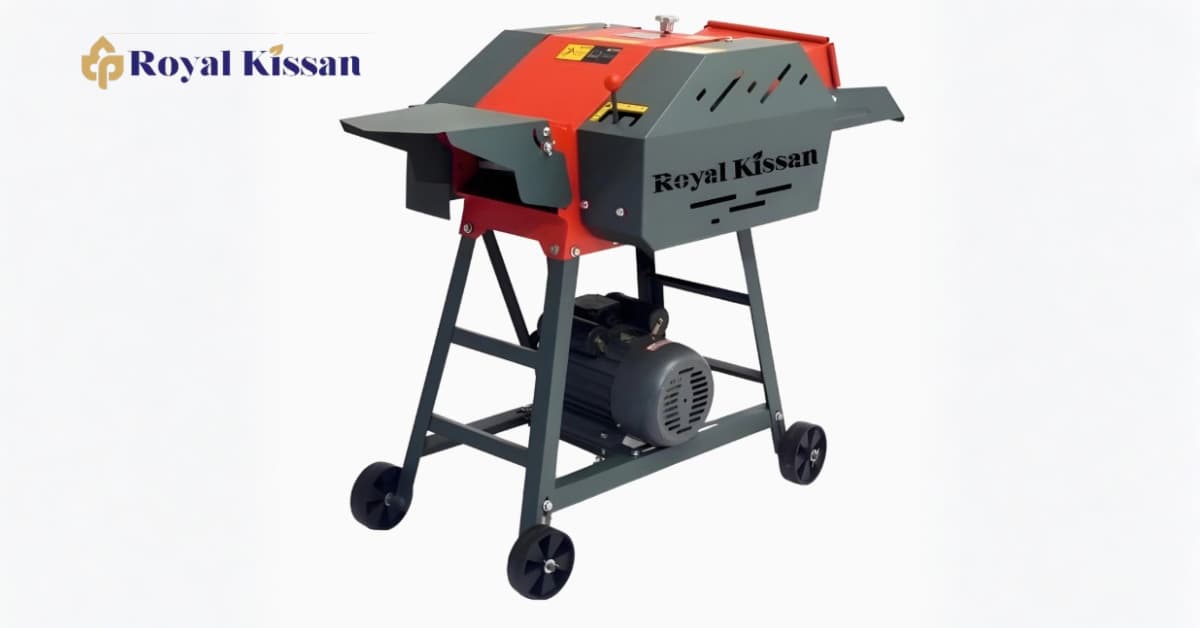
Through the Krishi Yantrikarana scheme, Karnataka directly cuts the purchase cost of chaff cutter machines (ಮೇವು ಕತ್ತರಿಸುವ ಯಂತ್ರ) for farmers who qualify. Your caste category decides the slab — SC/ST farmers get a bigger cut, general category farmers get less. No two taluks get the same number of slots either. The district budget decides that, and it changes every year.
Dairy farmers get the most out of this. Hand-cutting fodder for 3–4 cattle takes close to two hours daily. A power-operated machine brings that down to under twenty minutes. That is the actual difference the subsidy pays for.
About the Scheme
Krishi Yantrikarana is part of Karnataka’s Farm Mechanisation Scheme. Funding comes from both the state and central governments — the Centre’s share flows through SMAM (Sub-Mission on Agricultural Mechanisation). On the ground, the Agriculture and Animal Husbandry departments manage who gets what.
Some years, under special drives, machines were distributed free to a selected group of farmers. That happens occasionally, not every year. The regular process is: the farmer buys, the department verifies, subsidy is credited back.
Subsidy Breakdown — 3 HP Chaff Cutter
For a 3 HP power-operated machine priced at ₹49,594, this is what each category actually pays:
| Category | Machine Price | Subsidy | Farmer Pays |
| SC / ST | ₹49,594 | ₹27,844 | ₹21,750 |
| General | ₹49,594 | ₹15,469 | ₹34,125 |
SC/ST farmers pay ₹21,750 out of pocket — the government covers the rest. General category farmers pay ₹34,125. Both figures assume you are buying from an approved dealer. Buy elsewhere, and neither number applies.
These figures change. Every April, districts revise the approved machine list and the subsidy pool. Before you buy anything, confirm the current numbers at your local Raitha Samparka Kendra — what is printed here may already be outdated by the time you read it.
Eligibility Conditions
All four of these must apply to you:
- Permanent resident of Karnataka
- Agricultural land registered in your own name — RTC or Pahani document as proof
- No chaff cutter subsidy has been taken under this scheme in the past 7 years
- Dairy or livestock farmers are moved up in priority during the final selection
The 7-year window is counted strictly. Got the subsidy in 2017? You qualify now. Got it in 2019? You do not — wait until 2026–27.
How many farmers get picked in your taluk depends on the budget that year. Taluks with heavy dairy activity typically get more slots.
Documents — Collect Before You Apply
Walk in with all of this, not half of it:
- Aadhaar card
- Bank passbook — Aadhaar must already be seeded to this account or the DBT transfer will fail
- RTC / Pahani land records in your name
- Passport-size photograph
- Bond paper — department specifies the format, ask at the Kendra
- Ration card
- Mobile number registered with Aadhaar — OTP is sent here at the time of application
One missing document = application returned. Do not assume you can submit the rest later.
Application Process
Offline — Raitha Samparka Kendra
Go to your nearest Hobali-level Raitha Samparka Kendra. That is the taluk agriculture office. Ask the counter for Arji Namune — the application form. Write in your personal, land, and bank details. Attach photocopies of every document on the list above. Submit it before the deadline posted at the office for the current year’s batch.
Most farmers in rural areas use this route. You do not need internet access or a smartphone for this.
Online — Raitha Mitra Portal
Open raitamitra.karnataka.gov.in on your phone or computer. On the portal, look for the agriculture equipment subsidy section and open the chaff cutter option from the list. Your Aadhaar-linked number is your login — enter it, punch in the OTP, and you are in. From there, fill in your land and bank details, attach scanned copies of every document, and hit submit. The portal gives a reference number at the end. Screenshot it or write it down immediately — there is no way to retrieve it later if you lose it.
The K-Kisan portal of the Karnataka government also accepts applications. It has a downloadable step-by-step PDF guide called Kaipidi if you want a walkthrough with screenshots.
How the Subsidy Reaches Your Account
You do not get a discount at the shop. Full payment goes to the approved dealer upfront. The department then checks your purchase against its records. Once confirmed, the subsidy is wired straight to your Aadhaar-linked bank account via DBT (Direct Benefit Transfer).
No middleman is involved. Nobody from any government office will collect cash from you as part of this process. If someone claims otherwise, do not pay.
Before You Apply — Key Points
Submit early in the year. April and May are the best months. District quotas fill up fast, especially in dairy-heavy taluks. By the third quarter of the financial year, many areas have already closed their lists.
Recheck your 7-year history. If your name appears in the department’s records for a chaff cutter subsidy anywhere between 2018 and 2024, your 2025–26 application will be rejected at screening. Seven years from the date of disbursement — that is the cutoff, no exceptions. Not sure when yours was processed? Call the taluk office directly and ask them to check. They keep those records.
Aadhaar-bank linking is mandatory. A passbook alone does not work. The DBT transfer goes only to accounts where Aadhaar is seeded. If yours is not done, visit your bank branch and get it sorted before applying.
Buy from the approved list only. The department keeps a list of authorised dealers. Buying from anyone outside that list disqualifies your subsidy claim entirely — machine quality does not matter, only the dealer’s status on that list does.
Confirm current-year details at your taluk office. Machine models, prices, and subsidy slabs shift every year. Spend two minutes on a phone call before making the trip to the Kendra.