
Weeder in India: Market Overview, Global Leaders, and Buyer’s Guide
The Big Picture
- India’s power tiller market is forecast to add roughly USD 47.6 million in value between 2026 and 2030, growing at a 7.6% to 8.1% CAGR.
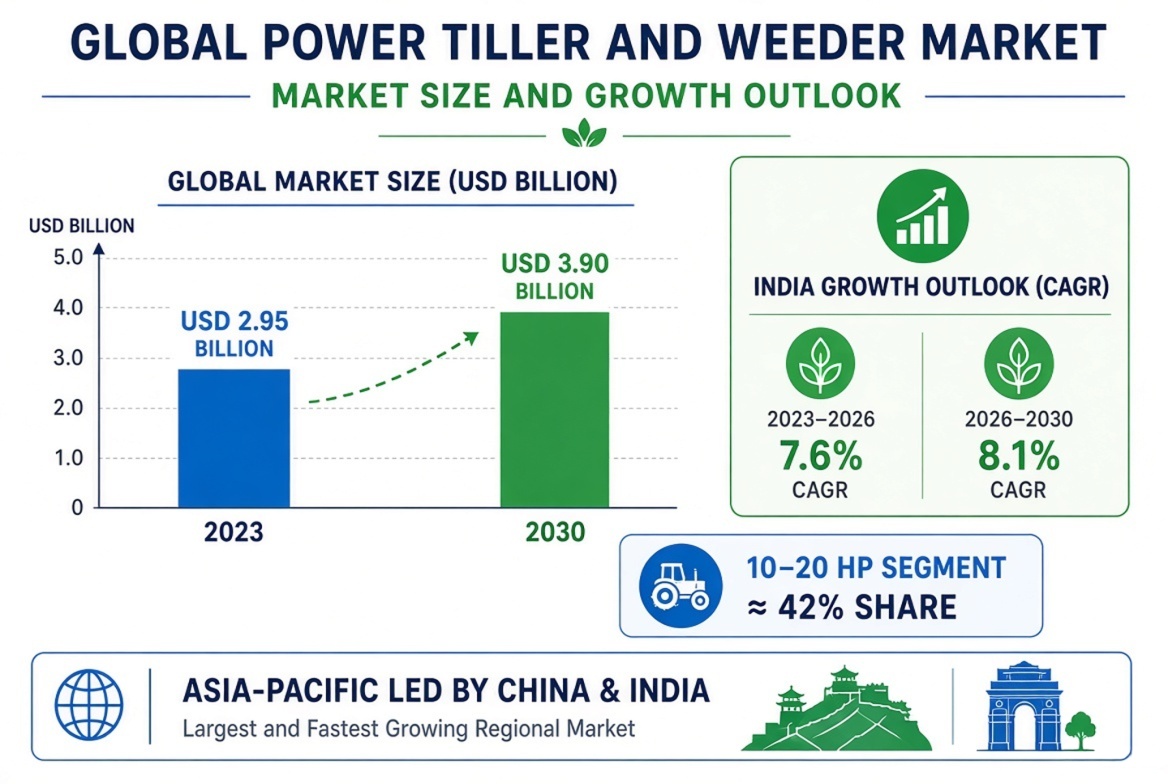
- The global power tiller and weeder market was valued at USD 2.95 billion in 2023, projected to reach close to USD 3.90 billion by 2030.
- Nearly 93% of India’s farmers fall into the small and marginal category, which shapes demand toward lighter machines over large tractors.
- Japan pioneered the power tiller in the 1940s; China now leads in export volume; India has built its own domestic manufacturing base.
- Certification (FMTTI, ISO 9001:2015), subsidy eligibility, and dealer network reach matter more to buyers than headline horsepower or price.
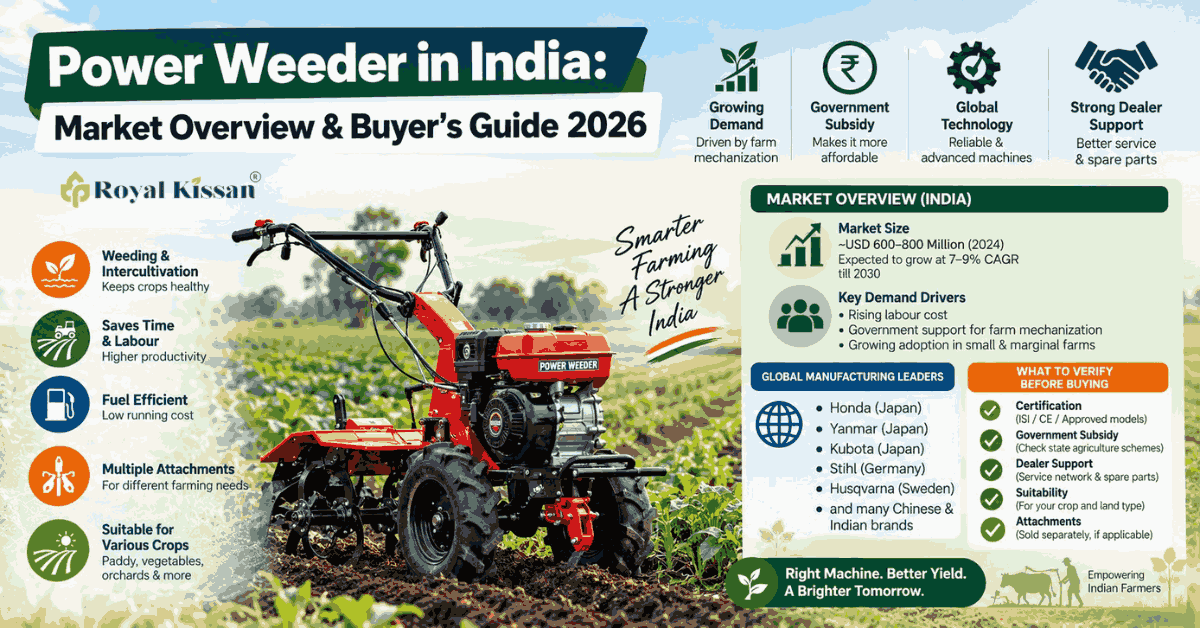
India’s power tiller and weeder market is valued at roughly USD 2.95 billion globally as of 2023, growing toward USD 3.90 billion by 2030, with India and China driving most of that demand. This guide covers where the Indian market stands, how it compares to global manufacturing hubs, and what to check before buying a power weeder or power tiller.
Table of Contents
- Market Overview
- Why Demand Is Rising
- Global Leaders
- What Buyers Should Compare
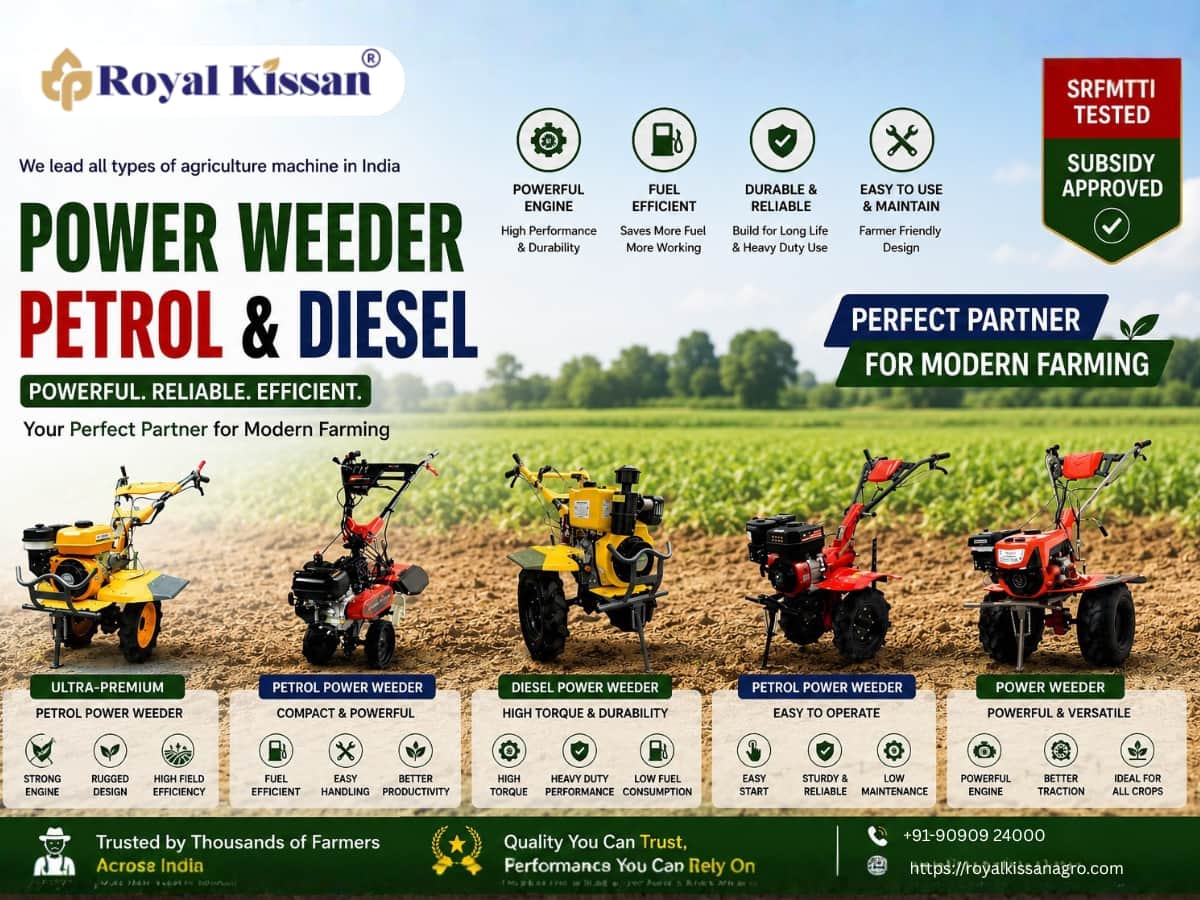
- Royal Kissan’s Position
- Takeaway
- FAQ
India’s power tiller and weeder market size, global manufacturing leaders, and what to verify (certification, subsidy, dealer support) before buying.
Market Overview: How Big Is India’s Weeder and Power Tiller Market?
India’s power tiller market is forecast to grow from its current base at a CAGR of around 7.6% to 8.1% through 2030, adding an estimated USD 47.6 million in market value between 2026 and 2030 alone. Globally, the power tiller and weeder market sits within a broader USD 2.95 billion industry as of 2023, expected to approach USD 3.90 billion by 2030 at a 4.07% CAGR, with the agriculture segment accounting for more than 65% of that demand.
Within horsepower segments, the 10 to 20 HP range holds the largest global share at around 42%, valued for maneuverability on small and fragmented farms. Asia Pacific dominates the market overall, led by China and India, both of which combine large farming populations with substantial domestic manufacturing capacity.
Why Demand Is Rising in India
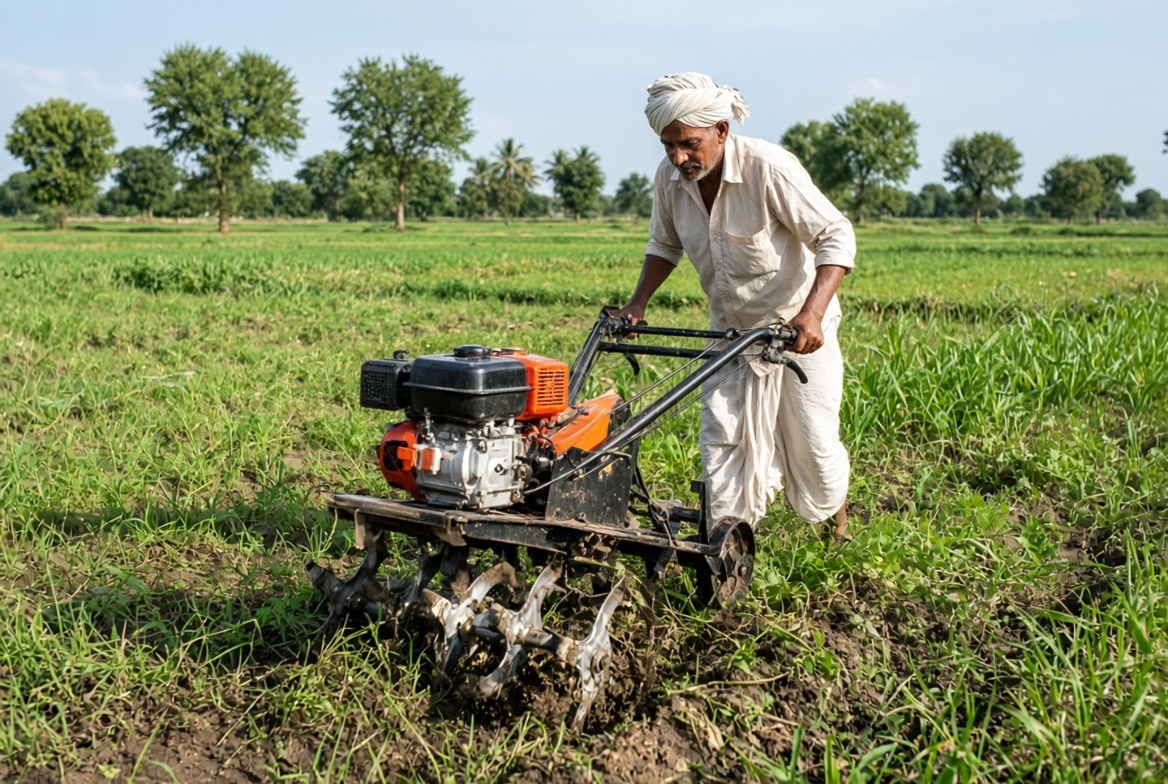
Two forces are pushing Indian farmers toward mechanized weeding and tilling: rising rural labor costs and a shrinking pool of available farm labor. As manual weeding and tilling become harder to staff and more expensive per day, machines that used to be optional for small farms are becoming standard.
This shift matters more in India than in many other markets because of how fragmented Indian landholding is. Small and marginal farmers make up close to 93% of India’s total farming population, and lightweight tillers and weeders in the 4 to 9 HP range, typically weighing 60 to 500 kg, suit their plot sizes far better than large tractor-mounted equipment. That weight range also makes these machines practical in hilly or uneven terrain, which is common across parts of India where full-sized tractors can’t operate efficiently.
Government platforms are reinforcing this trend as well. Digital tools like the Kisan Suvidha App now give farmers direct access to information on modern farming equipment and techniques, which is helping close the awareness gap that has historically slowed mechanization in rural areas.
Global Leaders: Where Does Technology Come From?
Japan holds the historical lead in power tiller technology. The machine originated there in the 1920s, with the first commercially successful model developed in 1947, decades before it reached India in 1963. Early Indian manufacturing was built directly on Japanese engineering collaborations, which is part of why Japanese engine and gearbox design standards still influence how power tillers are built in India today.
China has since become the dominant force in manufacturing volume and export pricing, supplying a large share of the entry-level and mid-range machines sold across Asia, Africa, and parts of South America. European manufacturers hold a smaller but established position, generally in higher-spec, higher-price machines aimed at commercial and export markets rather than smallholder farms.
India itself has grown into a manufacturing base in its own right, not just an importer. Government policy has actively pushed this shift. Import restrictions on certain Chinese-made agricultural implements, introduced to support India’s domestic manufacturing push, have opened space for Indian manufacturers to scale up production of tillers, weeders, and related parts.
- FMTTI: The Farm Machinery Training and Testing Institute, a government body that tests agricultural machinery for performance and safety before it qualifies for state subsidy schemes.
- ISO 9001:2015: An international standard for quality management systems, indicating a manufacturer follows documented, consistent processes across production.
- MSME Udyam Registration: India’s government classification for micro, small, and medium enterprises, used to verify a manufacturer’s registered status for subsidy and procurement purposes.
What Buyers Should Actually Compare
Most buyers’ guides default to comparing horsepower and price. That’s necessary but not sufficient in the Indian market, where certification and support infrastructure often decide whether a machine performs and holds its value.
- Certification and testing. Look for FMTTI (Farm Machinery Training and Testing Institute) or SRFMTTI approval on the specific model, not just the brand generally. Government subsidy schemes typically only approve models that carry this testing, so a machine without it may not qualify even if it’s otherwise a good fit.
- Subsidy support. Confirm whether the manufacturer or dealer offers paperwork assistance for subsidy applications. Scheme percentages and approved model lists vary by state and change each cycle, so this needs to be confirmed at the time of purchase, not assumed from older information.
- Quality management certification. ISO 9001:2015 certification indicates the manufacturer follows a documented quality management system across production, which is a reasonable proxy for consistency when you can’t personally inspect the factory floor.
- Manufacturer registration. MSME Udyam registration signals the company is a recognized small or medium manufacturer under Indian government classification, which matters for subsidy paperwork and for verifying the business is a genuine manufacturer rather than a reseller.
- Dealer network and service reach. A machine is only as useful as the nearest place you can get it serviced. Pan-India dealer coverage matters more for ongoing use than it does at the point of sale, since blades, gearboxes, and filters need periodic replacement.
- Fuel type against your actual field conditions. Diesel suits continuous, heavy-duty use in paddy and sugarcane; petrol suits lighter, shorter-duration work on smaller plots. This should be decided by soil and crop, not by whichever is cheaper to buy upfront.
Royal Kissan’s Position on These Criteria
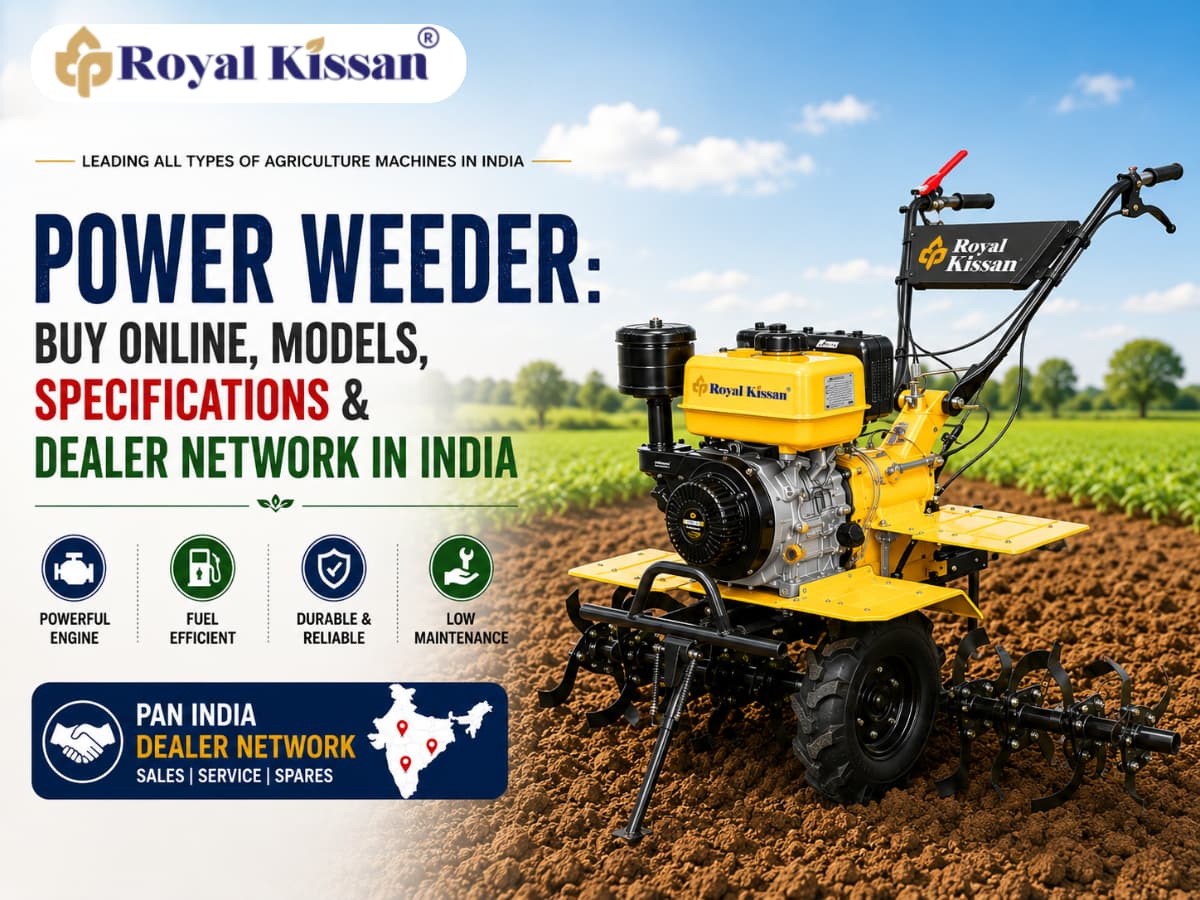
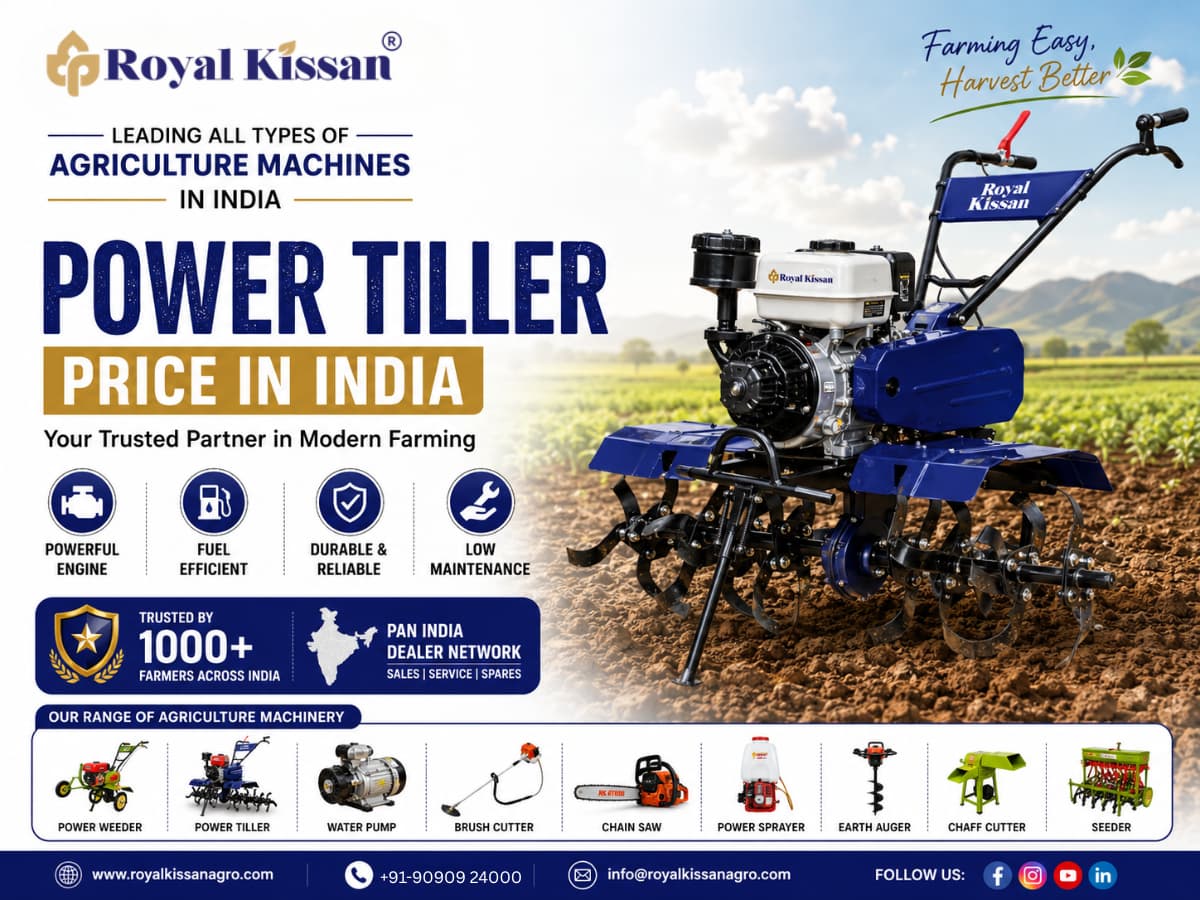
Royal Kissan is an MSME Udyam-registered manufacturer (Udyam-MH-33-0070229) based in Dombivli, Maharashtra, with select models carrying FMTTI or SRFMTTI testing and subsidy-approved status. The company holds ISO 9001:2015 certification and offers paperwork assistance for subsidy applications, alongside a pan-India dealer network for sales and ongoing support.
Takeaway
Horsepower and price are the easiest numbers to compare, which is exactly why they’re not the most useful ones. A weeder built on Japanese engineering standards or produced at Chinese manufacturing scale still has to pass FMTTI testing and reach a working dealer before any of that history matters to the farmer using it. The market data points in the same direction: demand is rising fastest among small and marginal holdings, where the deciding factor is rarely top-end power and almost always whether the machine is certified, subsidy-eligible, and serviceable nearby.
Frequently Asked Questions
How big is the power tiller and weeder market in India?
India’s power tiller market is forecast to grow at roughly 7.6% to 8.1% CAGR through 2030. Globally, the power tiller and weeder market was valued at about USD 2.95 billion in 2023, projected to reach close to USD 3.90 billion by 2030.
Which country makes the best power tillers?
Japan pioneered power tiller technology in the 1940s, and its engineering standards shaped early Indian manufacturing. China now leads on export volume and pricing, while India has built up its own domestic manufacturing base, partly supported by import restrictions on certain foreign-made implements.
What should I check before buying a power weeder in India?
Confirm FMTTI or SRFMTTI testing on the specific model, ISO certification of the manufacturer, MSME registration, subsidy eligibility, and whether there’s a real dealer network near you for servicing, not just for the initial sale.
Why is demand for power weeders rising in India?
Rising rural labor costs and a shrinking pool of farm labor are pushing more small and marginal farmers, who make up close to 93% of the farming population, toward lightweight mechanized alternatives to manual weeding.
Is a 6 to 12 HP power weeder available in India?
Manufacturer ranges vary. Confirm the exact HP lineup on the specific manufacturer’s current product pages before assuming a given range is available, since published specs change as new models are added.
Conclusion
India’s weeder and power tiller market is growing on the back of labor economics, not novelty. Machines from Japan’s early engineering lineage, China’s manufacturing scale, and India’s own expanding domestic base all compete for the same buyer, but certification, subsidy support, and dealer reach decide which one actually holds up on a working farm. Check those before comparing horsepower numbers.