

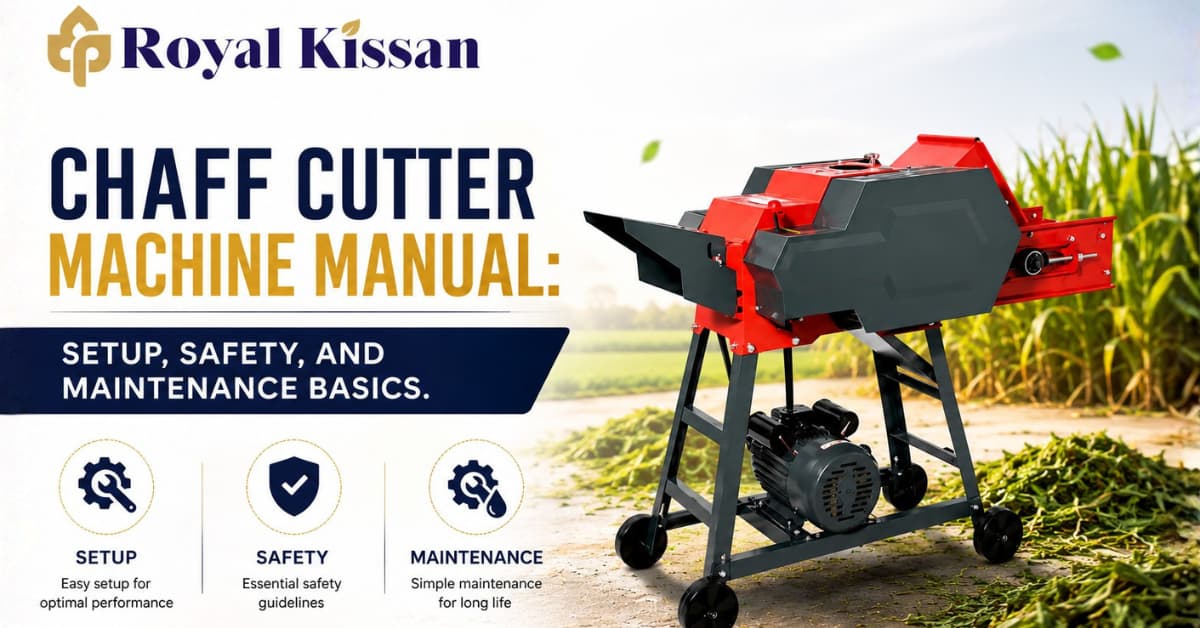
Chaff Cutter Manual Machine Set Up, Operating Safely Daily, And Maintenance
This manual will provide you with information regarding setting the machine up correctly for initial use, how to use the machine in a safe manner daily, and how to maintain the machine so that it lasts as long as possible. None of it is complicated. Most problems that show up on chaff cutters after a year or two trace back to one of these three areas being skipped early on.
Initial Setup — Getting Your Chaff Cutter Ready for First Use
Proper setup before the first run takes under 30 minutes. That half hour determines a lot about how the machine holds up over the next few years.
Unpacking and Assembly
Go through every part for transit damage before putting anything together. Mount the frame and motor, get the belt tension to firm without being rigid, then spin the pulley by hand — it should turn freely without any dragging or resistance. Assembly done — now go through the whole machine and check every bolt. Tighten anything that moves even slightly. The moment a single bolt becomes loose due to the vibration created by running an engine, the bolts adjacent to it become loose as well due to the same vibration. As time goes by, these adjacent bolts will also become loose from the vibration created. Eventually, after several weeks of daily operation, the entire frame will be vibrating/rattling every morning. One bolt, completely preventable. Close the cover firmly before starting the motor — open covers during operation are a safety risk and a damage risk at the same time.
First-Use Lubrication and Blade Check
Grease every bearing and gear on the machine before the motor gets switched on for the very first time. Dry metal surfaces grinding against each other on that first run cause damage that does not show up immediately but adds up fast over months of use.
Lubrication done — next is the blade gap. Measure the clearance between the fixed blade and the moving blade and get it sitting between 0.5 mm and 1 mm. Wider than that, and the fodder comes out torn and badly cut. Tighter than that, and the blades start making contact with each other, chipping the edges and ruining them in a short time. Use gloves during this adjustment. Never use a hammer or rod to reposition blades.
Motor on — stand and listen for a full minute before touching anything else. Friction sounds, knocking, any noise that should not be there — switch off immediately. Do not run it longer, hoping it clears up on its own. Go back through the assembly, locate the problem, sort it out, then try again.
Safety Rules Every Operator Must Follow
Chaff cutter injuries are common on Indian farms and are almost always avoidable. The same mistakes come up repeatedly — operators who knew the right habits but stopped following them. What follows are not suggestions. Follow them every time the machine runs, without exception.
Never put your hand anywhere near the feed inlet while the motor is on. Do not use wooden or metal rods to push fodder toward the rollers — this is exactly how hand injuries happen, and it happens regularly.
Stand beside the feed table, not in front of the discharge outlet. Chopped fodder comes out fast. Standing in the path of the outlet is asking for an injury.
If the feed inlet jams, push the handle to stop right away. Wait a few seconds, then shift to Reverse to clear it out. Never force material through a jammed inlet — the machine will not win, but neither will your hand.
Unusual sounds mean stop immediately. Do not try to diagnose the problem while the motor is still running. Never open the protective cover with the motor on.
Step away for even a minute — cut power first. Children have no business near a running or unattended chaff cutter, full stop.
Power supply needs checking before every use — voltage above 200V, cable no longer than 10 metres, machine properly earthed, 60A breaker fitted within 2 metres of the source. These are not numbers someone put in a manual to make it look thorough. They come from where things actually go wrong on farms.
Maintenance Basics — What to Do and When
A chaff cutter that gets basic regular attention costs far less to run than one that gets ignored between breakdowns. None of it is complicated or time-consuming if done on a consistent schedule.
Blade and Roller Care
Sharpen both the moving blade and fixed blade every 100 to 150 hours of operation. Dull blades do not just cut badly — they make the motor work harder and push up electricity consumption. Sharpen the moving blade along its inclined face, grind the fixed blade flat. Two different angles — get this backwards and the sharpening does nothing useful. Any blade that has worn down too far to take a proper edge needs to come off and get replaced. Running worn-out blades strains the motor and gives poor cuts every session.
Check kneading rollers and tooth plates regularly, too. When worn on both sides, most can be saved by welding and grinding smooth before replacement becomes necessary — worth checking before spending on new parts.
Finished cutting damp fodder — do not walk away yet. Inspect each area where metal touches metal; clean the area, then apply a thin coat of anti-rust oil to the area. Metal will remain moist for a longer period of time than is usually observed; consequently, any bare metal surface that remains wet from condensation overnight will begin rusting very quickly after warm temperatures. Rust on cutting areas means the machine performs worse, and parts wear out before their time.
Lubrication, Belt, and Body Maintenance
Lubrication, belt condition, and body care — these three things, between them, decide how many years the machine runs properly. Each task is short. Skipping any one of them regularly starts showing up in performance and repair costs sooner than expected.
Wipe off old dust and dried-up grease before putting fresh lubricant on anything. Old contaminated grease ground into a bearing does more damage than running dry. Bearings need lithium grease every 50 hours of use. Gearbox oil should be changed each season. The main shaft bearing needs fresh grease at a minimum once a year.
Belt tension needs a check every month without fail — a slack belt loses grip under load, blade speed drops, and the cutting gets uneven well before most people notice why. Do not wait for a belt to snap in the middle of the morning session. Cracking or fraying means replace it today.
Clean the feed rollers after every use — fodder residue hardens around the shaft over time and becomes a real problem to remove once it builds up. Look over the machine body every few weeks for peeling paint or early rust spots. Repaint those areas before corrosion gets under the surface and spreads.
Conclusion
Blades are sharpened every 100 to 150 hours. Bearings are greased every 50. Belt looked at it once a month. That is the whole schedule — three things at fixed intervals, nothing complicated about any of it. Stick to it without skipping, and the machine keeps working well for years. Stop doing it regularly, and parts start failing earlier than they should, every time.