
Power Weeder 9HP Price: Buying Guide for Petrol, Diesel and Gear-Driven Models
A 9 HP power weeder sits at the top of the walk-behind weeder range in India, built for paddy, sugarcane, and other heavy, continuous fieldwork. This guide covers what drives its price, how petrol and diesel 9 HP variants compare, and whether 5 HP, 7 HP, or 9 HP is the right fit for your farm, using Royal Kissan’s verified product range.
Table of Contents
- Power Weeder Cultivator: What Is a 9 HP Model?
- 9 HP Gear-Driven Power Tiller: How It Works
- 9 HP Petrol Power Weeder
- 9 HP Self-Start Diesel Engine Power Weeder
- Power Weeder 9HP Price: What Determines It
- 5 HP vs 7 HP vs 9 HP: Which Should You Buy?
- Buying a Power Weeder From a Verified Manufacturer
- Royal Kissan 9 HP Power Tiller and Related Models
- Frequently Asked Questions
Power Weeder Cultivator: What Is a 9 HP Model?
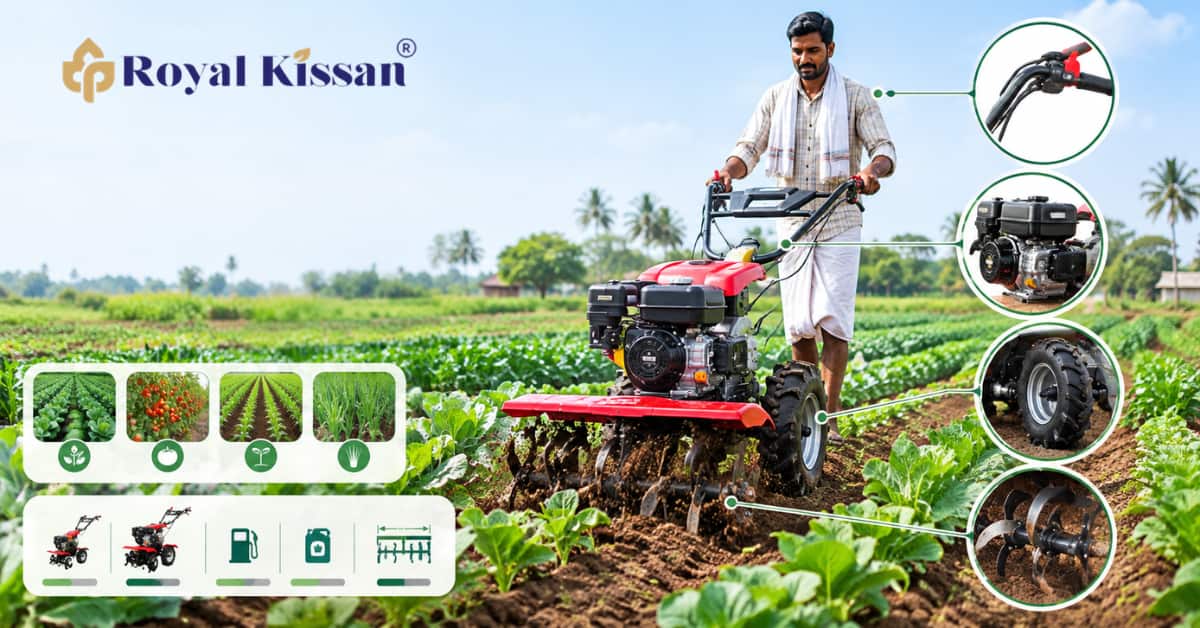
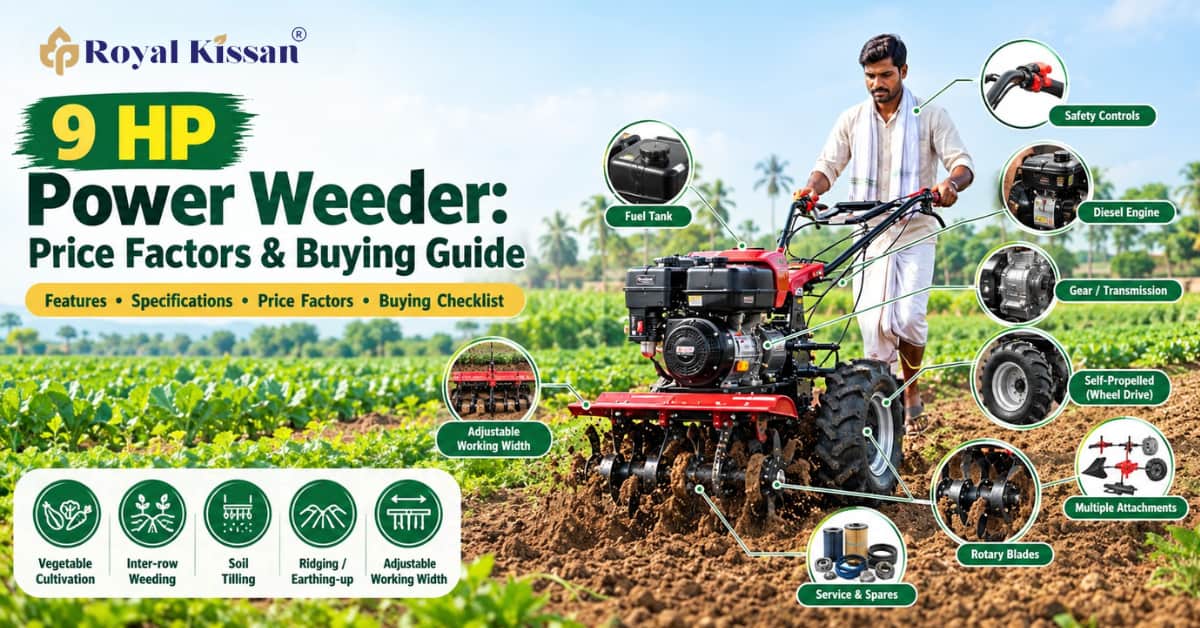
A 9 HP power weeder cultivator is a walk-behind, engine-driven machine at the upper end of the weeder power range, built for the toughest soil and the longest working days. At this power level, most models are diesel, gear-driven, and built with a heavier frame than the lighter 5 HP petrol machines meant for vegetable plots and orchards.
The extra power matters most in continuous, high-resistance conditions: puddled paddy fields, dense sugarcane rows, and larger open plots where a lighter machine would need more passes or stall under load. It’s not the right choice for every farm, which the comparison further down covers.
9HP Gear Driven Power Tiller: How It Works
A gear-driven design, as opposed to a chain- or belt-driven one, transfers engine power through a sealed gearbox rather than an exposed chain. At 9 HP, this matters more than at lower power levels, since a gear-driven system holds up better under the sustained torque needed for heavy, wet soil like paddy fields, with less maintenance than a chain-driven equivalent would need at the same power output.
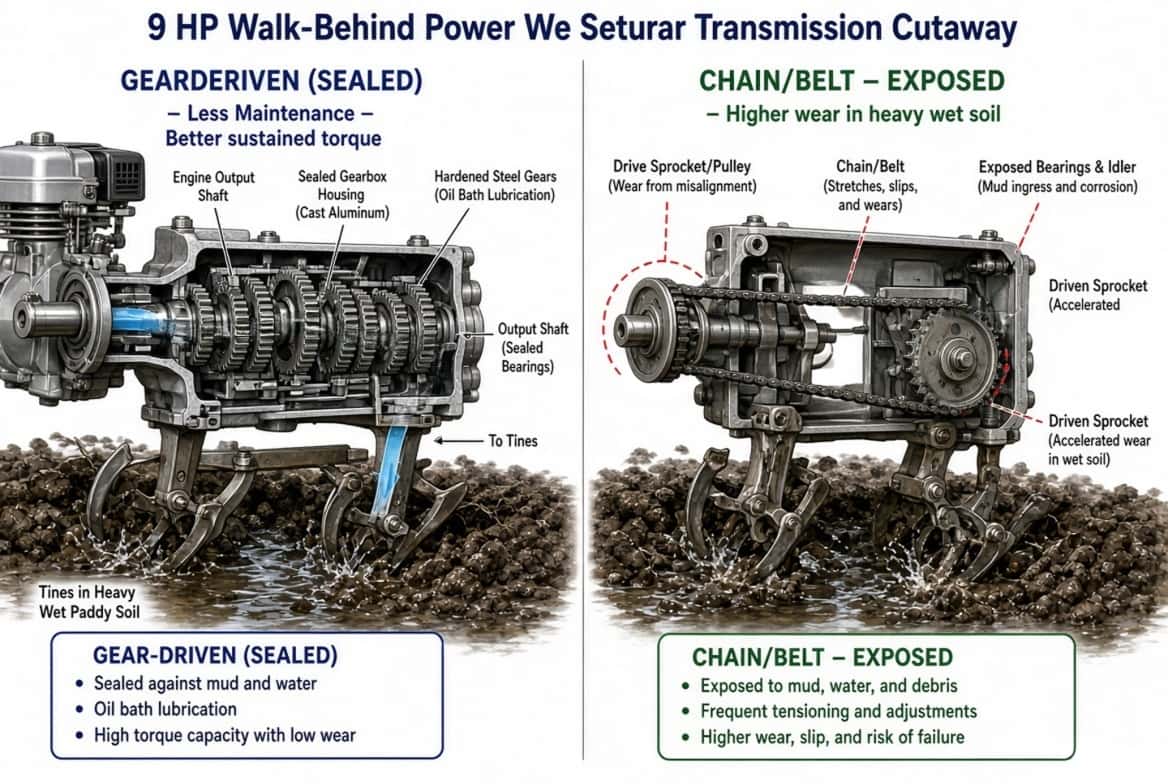
9 HP Petrol Power Weeder
Petrol variants exist at the 9 HP level, but they’re less common than diesel, since the main use case for 9 HP power (heavy, continuous soil) is exactly where diesel’s fuel efficiency and torque advantage matter most. A 9 HP petrol power weeder still offers easier starting and lighter handling than its diesel equivalent, which can suit farms that want the higher power band without moving to diesel maintenance and fuel logistics.
9HP Self Start Diesel Engine Power Weeder
A self-start (electric start) 9 HP diesel power weeder removes the recoil-pull step that petrol and manual-start diesel models rely on, which matters most on farms running the machine multiple times a day. Diesel dominates at this power level generally, for the same reason it dominates in tractors and tillers: better torque under sustained load and lower running cost per hour of heavy use. If your fieldwork is lighter or shorter in duration, a 9 HP machine, self-start or not, is likely more power than you need. See the comparison section below.
Power Weeder 9HP Price: What Determines It
Royal Kissan doesn’t publish a fixed price list, and neither do most manufacturers selling through a dealer network rather than direct online checkout, so treat any advertised fixed price as a starting point rather than a final figure until a dealer confirms it. Price on a 9 HP model depends on several factors:
- Fuel type. Diesel engines cost more upfront than equivalent petrol engines but run longer per fuel unit under heavy use.
- Start mechanism. Self-start (electric start) diesel models cost more than recoil-start petrol models.
- Series and build. Higher-tier series with reinforced frames, larger blade counts, and additional features price above entry-level models at the same HP.
- Certification. FMTTI– or SRFMTTI-tested, subsidy-approved models may carry a premium reflecting the testing and compliance work, but they also unlock subsidy eligibility that can offset the higher sticker price.
- Region and dealer. Local transport, dealer margin, and state-specific taxes shift the final quoted price.
To get an accurate number for a specific model, submit an enquiry through the manufacturer’s website; a dealer in your area follows up with current pricing rather than a generic online listing.
5 HP vs 7 HP vs 9 HP: Which Should You Buy?
There’s no single “better” horsepower. Each band suits a different combination of soil, plot size, and crop.
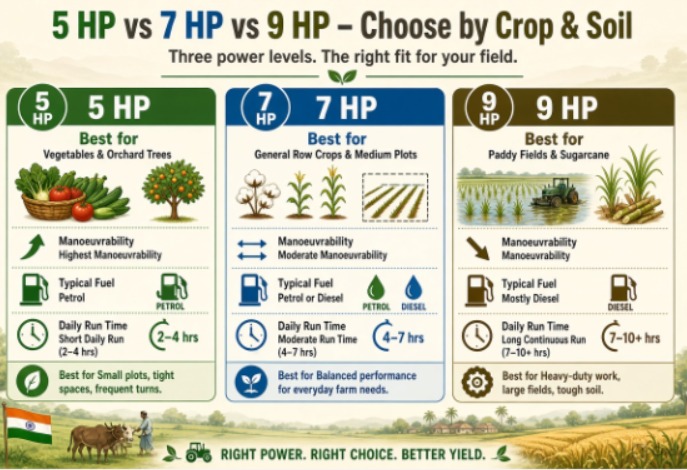
5 HP is the lightest option, easiest to manoeuvre in narrow rows, and well suited to vegetable farms, nurseries, and orchards with tight spacing. It’s underpowered for continuous heavy soil work but ideal where manoeuvrability matters more than raw power.
7 HP is the middle ground most Indian farmers land on. It has enough power for moderately heavy soil and larger plots without the added weight, fuel demand, and cost of a 9 HP diesel machine. This is also the power band most associated with subsidy-tested models in the current Royal Kissan range.
9 HP is built for paddy, sugarcane, and larger farms running long daily hours in heavy or wet soil. It’s overpowered and more expensive to run for lighter tasks or smaller plots.
| Factor | 5 HP | 7 HP | 9 HP |
| Best for | Vegetables, orchards, nurseries | General row crops, medium plots | Paddy, sugarcane, heavy/wet soil |
| Manoeuvrability | Highest | Moderate | Lowest |
| Typical fuel | Petrol | Petrol or diesel | Mostly diesel |
| Daily run time suited | Short | Moderate | Long, continuous |
If you’re unsure which band fits your farm, match it to your heaviest recurring task, not your largest plot. A farm with one difficult paddy section and several lighter plots may still be better served by a 7 HP machine plus a rental or custom hiring centre option for the heavy section, rather than buying a 9 HP machine that’s overpowered for most of the year.
Buying a Power Weeder From a Verified Manufacturer
“Verified seller” claims are common in online agricultural machinery listings, but verification means different things depending on the platform. A marketplace badge confirms the seller has an active account; it doesn’t confirm the machine passed government testing or that a dealer exists near you for service. Check for these instead:
- FMTTI or SRFMTTI testing on the specific model, required for subsidy eligibility in most states.
- MSME Udyam registration, confirming the manufacturer is a recognized, registered entity, not just a reseller.
- ISO 9001:2015 certification, indicating a documented quality management process.
- An actual dealer near you, not just a listing that ships nationally with no local service point.
Royal Kissan 9 HP Power Tiller and Related Models
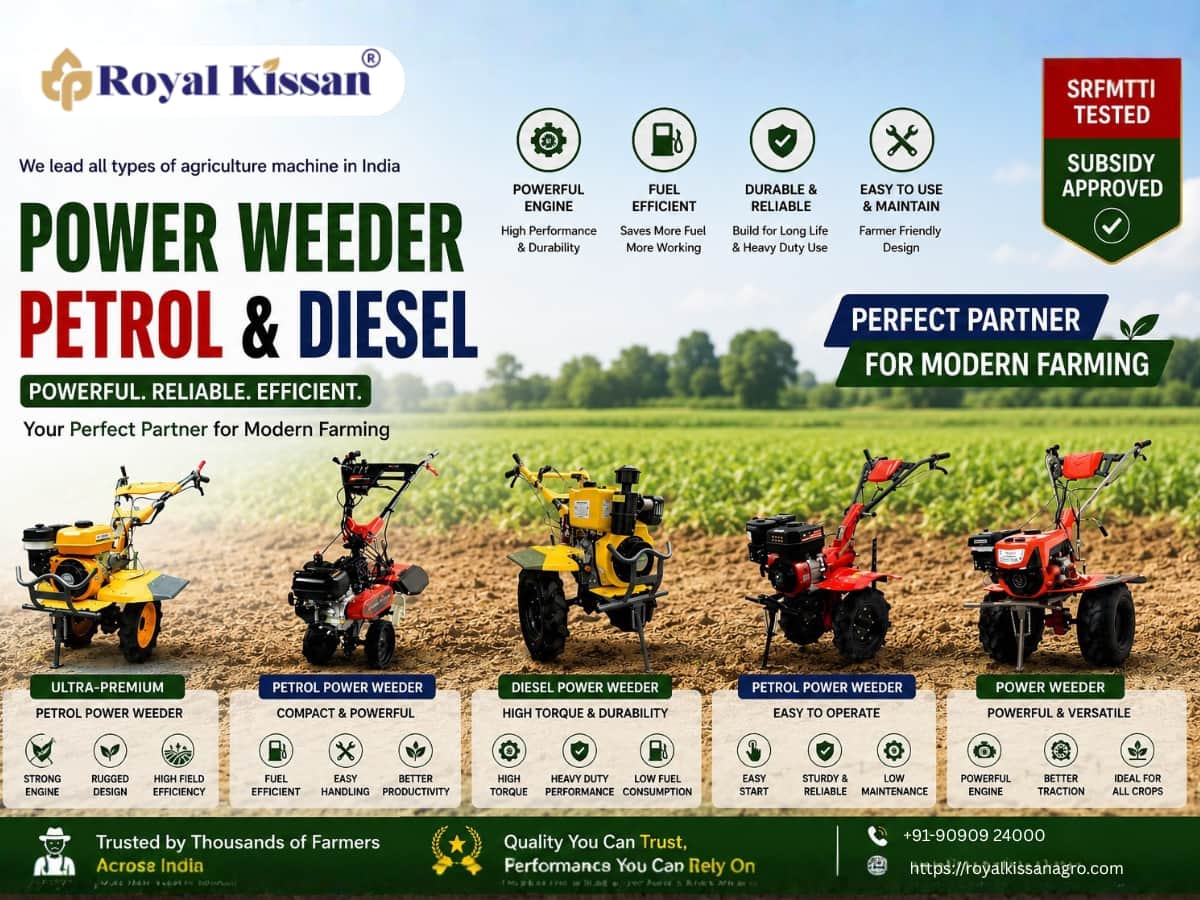
Royal Kissan’s Ultra Premium diesel series includes models reaching close to 9 HP, gear-driven, with self-start options on select variants, alongside the 7 HP RK-173F, which carries FMTTI testing and subsidy-approved status. The Classic and Premium petrol series cover the 5 to 7.5 HP range for lighter fieldwork. Full specifications and current pricing for any model are available through the dealer network on enquiry.
Frequently Asked Questions
What is the price of a 9 HP power weeder?
Price depends on fuel type, start mechanism, series, and certification status, and isn’t published as a fixed list. Submit an enquiry for the specific model to get a current price from your nearest dealer.
Is a 9 HP power weeder better than 7 HP or 5 HP?
Not universally. 9 HP suits heavy, continuous work like paddy and sugarcane; 7 HP covers general row-crop use; 5 HP suits light, narrow-row work like vegetables and orchards. The right choice depends on soil and crop, not on picking the highest number available.
Is diesel or petrol better for a 9 HP power weeder?
Diesel is more common at this power level because it handles sustained, heavy-duty load more efficiently. Petrol variants exist but are less common, since the typical 9 HP use case favors diesel’s torque and running-cost advantage.
How do I know if a 9 HP power weeder is subsidy eligible?
Check whether the specific model carries FMTTI or SRFMTTI testing and subsidy-approved status. Eligibility and approved lists vary by state and change periodically, so confirm current status with your local agriculture office or dealer.
What does “verified seller” mean when buying a power weeder online?
It usually confirms the seller has an active marketplace account, not that the machine passed government testing or that a local dealer exists for service. Check certification and dealer coverage separately.
Related Reading
- Best Power Weeder Manufacturers in India
- Power Weeder Petrol and Diesel (5-9 HP), Royal Kissan
- Power Weeder 5-9 HP
- Best Power Tiller Price in India
- Diesel Power Weeder Price
- Power Weeder with Attachment: A No-Nonsense Guide for Indian Farmers
- Why Every Indian Farmer Associates Himself With the 7HP Power Weeder